“They will have to unite the German, Italian and French budgets, otherwise the euro will fall” – 1/2
24-31 minutes
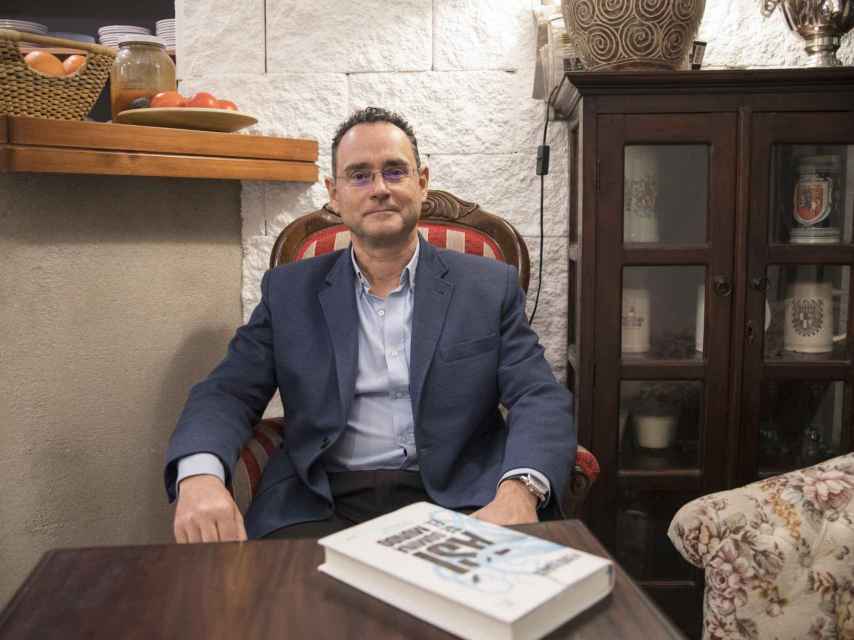
Interview with László Bogár, economist and university professor, former MP and former State Secretary of Hungary, publicist: “They will have to unite the German, Italian and French budgets, otherwise the euro will fall.” Part 1/2. At the end of November 2018, Raoul Weiss met with László
Bogár in Budapest for a interview without taboos on economical
topics. László Bogár is since the regime change a well-known Hungarian
economist: he is one the economists who shaped the Fidesz’ economical
policy. Author of 28 books, László Bogár has been State Secretary for
political questions of the Ministry of foreign trade relations from 1990
to 1994 and State Secretary at the Office of the Prime Minister under
Orbán’s first mandate, from 1998 to 2002. Very critical of the current
capitalistic system and of the EU’s evolution, László Bogár is a shining
example of what is a Central European “illiberal” economist. Raoul Weiss: On the euro
crisis: whether in Strasbourg or Budapest, everyone is talking about the
so-called “migration rights” all the time, but some suggest that these
big moral questions also serve as a screen for financial worries, which
would – among other things – give rise to the tensions which could
recently be seen in Brussels and Strasbourg; the same malicious gossip
also states that, faced with the financial losses implied by BREXIT,
Germany would like to pass on the bill to others: either to its broke
clients in Latin Europe, and / or its subcontractors in Central Europe.
In your opinion, what would be the most intelligent strategy from the
German point of view? And, among the subsets of German-owned states –
the Latin countries on the one hand, and Central Europe on the other –,
which do you think is capable of the greatest resistance? Or, to put it
more simply: if the Germans do not want to pay, who will pay? László Bogár: I would like to
begin my answer by sketching a vast historical panorama in the
background. Whatever one thinks of it, it is clear that in past
centuries, the West has always been the seat of a world empire. This is
particularly clear in the case of the Portuguese, Spanish, Dutch, French
and British empires: each of these nations held the empire of the world
for more or less a century; and, once almost all Western nation-states
have had their more or less 100 years of world power (this periodicity
of 100 years, by the way, is quite interesting in itself), the time has
come to transfer the empire beyond the ocean, to the United States of
America founded in the meantime there, as a pseudo-nation-state, but
which does
also function as a nation-state. And that century is the one we live in.
Though it will probably come to an end soon: if the empire mutates
every 100 years, then America too, within twenty years, might enter its
twilight zone. The most important thing is to understand that the world
currency is always the currency of the Western nation-state which
assumes the role of vector of the world empire, and which, ipso facto,
always shows a dual structure: while remaining a nation-state, it
simultaneously becomes the structural base of a world empire. Even
afterwards, the trace of this structure remains engraved in it, the best
example being from this point of view that of the British Empire: even
as long as Great Britain remained a member of the European Union (which
is still the case as I speak), it never considered for one minute giving
up the sterling – a former world currency – in favour of the euro. I imagine that the reader will not need long
explanations to understand what an immense advantage a given nation can
find in the fact that its national currency is at the same time the
world currency. Indeed, by simplifying to the extreme, it meant, in the
case of America in the 1960s and 1970s, that when the empire needed
money – for example to wage a war in Vietnam, which cost in the $ 5,000
billion, and the final bill is not yet issued, since pensions are still
being paid to veterans – it just printed all the money it needed, while
passing the bill to the rest of the world. Indeed, as long as the dollar
represented between 90 and 95% of world monetary reserves – a situation
that did not change until the end of the 1980s – only Charles de Gaulle
dared to provoke the system, an audacity for which, by the way, he paid
the highest price: in 1967 he demanded restitution of French gold, in
1968 he got a civil war for good measure, in 1969 he resigned, and died
in 1970. In 1971, under a secret agreement passed with Saudi Arabia, it
was decided that in the future, the Empire would whack all those who
would try to trade oil in currencies other than the dollar. After which
the price of oil was multiplied by 12, so that Western Europe would soon
no longer need to wonder what to do with its tons of dollars, being
forced to use them for its oil purchases. That’s how the world really works. What is
important to understand in this story is that, no matter how loudly the
masters of the world accuse us of believing in “conspiracy theories”,
what we are really witnessing is a conspiracy practice. (…) What must be
remembered is that the current world empire will always do everything
in its power to keep its status as long as possible, considering the
extraordinary opportunities yielded by the control of the world
currency. As we speak, a little less than 60% of the world’s reserves
are still in dollars, which is a huge drop from 95%, but still quite a
big proportion. Raoul Weiss: De Gaulle
famously called this the “exorbitant privilege”. [Erratum: these words
were those of Valéry Giscard-d’Estaing, then Minister of Finance; It is
frequently mis-attributed to Charles de Gaulle, who is said to have had
similar views, Ed.] László Bogár: Indeed, that phrase
goes straight to the point. As far as the euro is concerned, its status
stems from a deeper problem. In drawing up the list of nation-states
called to lead the empire, one cannot fail to notice that, after the
Portuguese, the Spanish, the Dutch, the French and the British, the
Germans did not have their turn. During the twentieth century, Germany
twice tried to capture the world’s empire for one hundred years. During
the two World Wars (which I usually call “projects”: two projects of the
global system of financial domination), the global system of financial
domination – the true masters of the world – sent very clear signs to
Germany, to make it understand the following message: “You will never
have the empire of the world. We recognize your talent, your zeal, your
enormous technological superiority, but you will never have it, not even
for 100 years, not even temporarily”. That’s why the real story of the
70 years following the Second World War is that of the constant efforts
of the American world empire to reduce Germany’s room for manoeuvre …
(…) [To parody the title of a] famous film from the Czech New Wave – Closely Watched Trains – one could say that those 70 years were years of Closely WatchedGermany.
On the cultural level, it was brutally tamed. The message was clear:
“You have no past, no culture, no history – everything that is about
identity is strictly forbidden to you”. And I just said the key word:
this whole story revolves around identity. The purpose of this
world-dominating power is to strip people – individuals as well as
communities of various sizes, up to entire nations – of their
identities, to dissolve them in what I usually call “scraping of diluted
multiculturalism”, the only attitude in which they become harmless from
the point of view of the system. Anyone who has an identity is
dangerous, because the very basis of human happiness is that I know who I
am, and no matter what hardships and sufferings I have to go through, I
know why I am confronting them – hence, I am someone. It is the only
possible way of existence, both for individuals and for human
communities of all sizes. This is what this invisible global system,
which keeps denying its own existence, is trying to crush.
Unfortunately, it seems to me that this crushing has been a success in
the case of Germany; its disastrous demographic figures, in particular,
show how far the Germans have disintegrated from a spiritual, moral and
intellectual point of view. In parallel, of course, Germany as a capital
structure has won gigantic victories during these 70 years. It
sometimes even managed to let America behind on the podium of world
exports (…). Even as I speak, the race is very tight; despite a huge
difference in the size of the two countries, Germany’s exports almost
match those of the United States of America. It’s a gigantic
performance. And in my opinion, this is where we come to the
point: for me, the euro is for Germany a kind of consolation prize. It
had to renounce the empire of the world, but at least it got the right
to coin a vice-world-currency. For me, the euro is the deutschmark of
the fourth German Reich. Of course, it is forbidden to name this fourth
Reich by this name – especially because it follows the Third Reich … And
the whole point is that for the American empire, more and more pushed
into its entrenchments, sinking more and more into chaos, the euro
becomes more and more of an obstacle. The empire would like to see the
euro collapse as soon as possible, because it becomes a competitor. 25%
of the world’s monetary reserves are in euros. Third place is the
sterling, followed by the yen and the Swiss franc, but all of these
haves shares around 3 or 4%. The rest is not even worth mentioning –
including China, with its yuan to be around 2.8%. Only the euro is able
to challenge the dollar: the more or less 60% of the latter and the 25
or 26% of the euro belong to the same scale. The amount of reserves in
euros is close to half that of reserves expressed in dollars. This is
all the more depressing for the American empire, as the latter also
loses ground in other areas, which makes it less and less able to retain
its global power, and plunges into a more and more serious funding
crisis – since all the expenses of the American empire are paid by the
American nation-state. The empire does not have a de iurebudget
– so, of course, the bill is passed to the nation-state. But the Iowa
farmer does not really understand why his country has an annual military
budget of $ 1000 billion, while no one in this world is threatening him
– and while will categorically refuse to protect him against what does
threaten him. For example: migrations. Raoul Weiss: But one may
wonder to what extent Germany is really determined to resist, given that
the German nation-state would like to have an empire, but is reluctant
to bear the cost … László Bogár: It is what the
Germans of today would like, as well as Germany, as part of the global
capital structure, as well as this German society, which still enjoys a
good share of well-being – they would desire this imperial status. Maybe
I wouldn’t dare to say that Germany does not want to pay the price; I
have rather the impression that it lacks the courage to admit that, in
order to defend her imperial candidacy, they would be obliged to
confront the American empire. This is where the limit of German daring
lies. Germany would like to step forward, but cannot even imagine what
this confrontation could mean. First, let us not forget that in the
1970s, Germany was the scene of numerous political assassinations:
high-ranking personalities (for example the director of Dresdner Bank [it seems that László
Bogár is referring to Alfred Herrhausen, then director of the Deutsche
Bank, or to Jürgen Ponto, spokesperson of the Dresdner Bank, Ed.]
) were slaughtered in the middle of the street, and the murderers were
never caught. The German elites then felt that the empire, if it feels
the need to punish them, can resort to quite brutal methods, so that
they do not wish to renew the experience of such a confrontation. To
some extent, the deepest sense of the migration crisis is that the
American empire wants to ruin the whole of Europe, and would be glad to
see the euro weakened or exploding – which would automatically free some
ground for the dollar, even if the result is no more than a
procrastination of the fall. The explosion of the euro would also have
extremely serious consequences for Germany. Admittedly, the most serious
consequences – a detail of great importance – would be in southern
Europe. Behind the disastrous situation of southern Europe, however, we
find – and this a very sensitive issue, a point on which one cannot
insist too much – the greed of German economic and political elites.
Indeed, those 2500 billion euros of Italian government debt include the
result of huge Italian trade deficits vis-à-vis Germany, of
which the latter has benefited hugely. In other words: to keep control
of the German imperial mark, the currency of the Fourth Reich, also
implies responsibilities. If the European Union was a unitary empire,
the problem would not even arise. Within the United States of America,
for example, it is not even possible to measure the exact share of Iowa
or Kansas in federal debt.
László Bogár (on the Left) and Raoul Weiss (on the Right) in Budapest, November 2018. Photo: Visegrád PostRaoul Weiss: There is already
some talk about a Franco-German joint parliament. It does not exist
yet, but it is already all over the media. But where is the common
budget? Macron has indeed made such a proposal to Merkel, but all Merkel
seems willing to grant is a tiny fraction of the requested sums… László Bogár: There is no
alternative. They will have to unite the German, Italian and French
budgets, otherwise the euro will fall. Spoken today, this sentence may
have accents of political science-fiction, and the German elite may
choose to say “no, I do not accept that” – but then the euro is over. In
that case, their calculation would be the following: let the euro sink,
even then, Germany will still be, in a way, the master of Europe – yes,
but the master of such a Europe in which not only Italy, but also
France are sinking into utter chaos. Here is the choice in relation to
which the Germans must now weigh the pros and the cons: openly assume
their will to operate a world empire of Europe, so that this empire can
survive, with the euro, or let down the whole thing, in which case it
will explode, which in the medium term will of course have catastrophic
consequences first for the French, Italian and all of southern Europe,
but will eventually not spare Germany either. They will soon have to
decide. The American empire is banking on the collapse of the euro,
which would favour its business. And there is also a certain part of the
German elite secretly thinking: “Let’s dump that shit – at least, it
will be a good riddance”. But the reason for this is that the German
elites have not yet got a clear idea of the size of the wounds that a
total explosion of the euro could inflict to Germany in the medium term.
I think that the coming years will be critical – say: the next five
years, during which the German elite will have to choose. And, from this
point of view, it will be very important to know who will succeed
Merkel as Chancellor – (…) This gentleman Merz, who was Wolfgang
Schäuble’s man – and, through Schäuble, in fact, a Helmut Kohl guy –,
one can suspect in what direction he is going. I suspect that he
might be able to understand the problem in all its magnitude, whereas,
as regards the other candidates, I’m really not sure that they would be
able to decipher the situation. No one can say today what would be
Merz’s answer if he ever had to face the problem as a Chancellor, but
he, at least, would be able to understand the problem itself, and to
make the German elites understand it. Merz also comes off a defeat in
the first round of the competition for the presidency of the CDU – which
could ultimately turn out to his advantage. But I think that the
decisive choice will be made within the next five years, and that it
will be of paramount importance: the future of the whole of Europe –
for, say, fifty years – will be determined by the capacity that
[Merkel’s] successor will have – or not – to understand the nature of
the situation and to provide such a strategic response that represents a
lesser evil for Europe. We are a little short of good solutions. Raoul Weiss: Let’s go back to
the euro – or rather, to the forint. In France, today, many describe
the euro as a trap. Assuming that it would also have been a trap for
Hungary – which is not certain, as the initial parameters were quite
different – we might say that Hungary managed to avoid the trap. There
remains, however, the question of how far this preserved forint
guarantees the monetary independence of Hungary – or, to phrase it very
plainly: is the forint really Hungarian money? László Bogár: There is a
Hungarian saying – full of that bitter irony that characterizes us –
according to which the only problem with the Hungarian National Bank is
that it is not Hungarian, nor national, nor even a bank; in fact, it is
the Hungarian local branch of the global financial power. This is a
consequence of the dogma of the “independence” of central banks, which
the liberal indoctrination has been inculcating to the Hungarian public
by means of a gigantic media arsenal – the dogma states that the HNB has
to be independent, that is to say that it should not depend on the
Hungarian people and the strategic interests of Hungary. Nowadays, thank
God, the Hungarian public discourse has been able to decode this idea,
and people now see exactly what this “independence” really means: the
obligation to serve the interests of the global financial power,
starting with the first of them: siphoning out of Hungary – partly
through exchange rates, partly in the form of interest on state debt –
as much resources as possible. Concretely: the interests on Hungarian
state obligations, which mostly leave the country, must be as high as
possible, and the exchange rates, as little favourable as possible for
Hungary. This is the real cause of the most serious conflicts which
Viktor Orbán’s governments had to face over the last eight years, and it
is highly likely that these conflicts – as the recent debates in the
European Parliament – will only intensify in the near future, especially
during the months before the European elections, but also afterwards.
They are largely rooted in the fact that Viktor Orbán is one of those –
still very few – European politicians who have identified this problem. A famous Hungarian thinker of the twentieth
century, István Bibó, said that the weakness of the Hungarian spirit is
that it produces on the one hand hypertensive realists, who see what’s
at stake in the world of their time, but do not know how to react to it
and therefore prefer to take refuge in a posture of prophets, an ivory
tower; on the other hand, false pragmatists, who adopt a cynical
attitude of saying: “Come on, whether we like it or not, we will have to
serve the world empire no matter who holds it, so why worry? The best
way to help ourselves is to help the Empire” – except, of course, that,
in doing so, they act against the interests of the majority of the
people. Raoul Weiss: The Gyurcsány type [Ferenc Gyurcsány, left-wing liberal, was Prime Minister of Hungary from 2004 to 2009, Ed.]. László Bogár: Indeed. And this is
what makes Bibó say that what we would need are pragmatic realists: men
able to understand the issues, to see that their homeland is cornered,
but also to have a pragmatic conception, based on the idea that there is
always a minimum of leeway: “Let’s try to loosen the noose!” And here
is the origin of the conflict: nowadays, even such a search of a minimal
leeway is perceived as a terrorist attack by the system of global
financial domination. Raoul Weiss: They got you rid of the IMF. László Bogár: Yes, and to do
that, it was even necessary to change the director of the central bank.
Obviously, the Prime Minister and the head of the central bank have to
work in tandem, in the closest possible collaboration, even perfectly
synchronizing their communication. And everything seems to indicate that
in the last eight years – at the cost of enormous risks, tensions and
conflicts – Hungary has succeeded – as is now generally admitted – to
reach a much more favourable financial situation than ten years ago. And
the lesson this teaches us seem to be that, even if the leeway is not
huge, even if it implies considerable risks – provided, of course, that
the circumstances make it possible – fortune smiles on the audacious.
This is why it takes a great deal of courage, intellectual courage,
knowledge and determination for a politician to truly act as a
responsible statesman, to be more than just a globalist collaborator –
even though, obviously, some level of collaboration is always
unavoidable. Indeed, direct confrontation does not make any sense
either. But, that being said, the leeway does exist, and it is a fact
that today, Hungary is more or less out of the trap, and enjoys some
level of freedom. We remain, of course, subject to the global system of
financial domination, but this freedom exists, and we may say that
qualitatively Viktor Orbán makes a much better use of it than Ferenc
Gyurcsány did – supposing, of course, that the latter really wanted to
make good use of it, which is a different issue. Raoul Weiss: Yet they’re still sucking your forints out of the country. László Bogár: Of course they are,
it’s beyond doubt. And the money pump is here to stay, but as a
Hungarian proverb says, “saving a little time can save your life.” The
simple fact that a local identity, moreover such an identity which was
quite unlucky historically during the last century – the Hungarian
nation – was able, within a decade, to avoid being deprived of, say, a
few miserable billions of euros per year may be sufficient to bring
about change – enough to give it, for example, small incremental odds in
the field of demography. Because, as you know, in Hungary as elsewhere,
that is the most serious problem: in the last thirty years, the number
of our deaths exceeds by one million that of our births. The population
is aging, which unbalances the age pyramid, and the working population
is plunging – which has the temporary advantage of upgrading the value
of workforce, which makes wage rises possible: the famine of labour is
such that capital is obliged to consent to small increases in wages. But most importantly, it seems that Viktor Orbán
embodies a victory of the realistic pragmatic option – in other words:
that his strategy is likely to succeed. Raoul Weiss: At present,
Hungary is getting richer and is industrializing a bit; but it was not
the same in the 1990s and early 2000s. This is a point I would like to
come back to, since, in Western European political debates – often even
in those of the Euro-critical circles – it has become customary to
present the V4 countries as clever parasites, who have become masters in
the art of sucking the blood of the great economies of the metropolis
through European funds. Now, following your activity as a publicist, I
was confronted with a radically different point of view on many
subjects, and especially on what was the real nature of these transfers
of wealth between East and West since the fall of communism – mostly
during the period immediately following the regime change. László Bogár: This view of the
situation seems extraordinarily wrong to me. Indeed, in the years
preceding 2004 (the year of Hungary’s accession to the EU) – that is to
say, a period of [14 years, but] we could even say twenty years, since
Hungary, as early as the 1980s, had passed some trade agreements with
the EEC which were even more disadvantageous [than the current
agreements] – Hungary unilaterally opened its markets. Let us not forget
that, as early as 1988, Hungary was open to inflows of foreign capital.
In this perspective, Hungary, as a country that opened its economic
space without compensations, has in fact made an enormous contribution
to the wealth of the West. There is at least a one-digit difference
between the total of funds that left Hungary, whether in the form of
profits or as interest on the debt – since its creditors were obviously
Western European countries – and the total aid received by Hungary since
accession. Hence, one could say that, to some extent, the
opposite is true: during the 14 years since the accession of Hungary to
the EU, Hungary has only recovered part (…) of what Western European
countries had unilaterally punctured during the 20 to 25 years elapsed
before the 2004 accession. The reason why it is nevertheless difficult
to address this subject in the media is that explaining this reality,
making it understandable is incomparably more complicated than to resort
to the striking but false metaphor of the wretched little cynical and
filthy parasite of the East, which everyone understands without
difficulty – which is even music to the ears of Western European
citizens, because it at least has the merit of providing a scapegoat:
thanks to such metaphors, they finally know what to think: “Here’s our
problem! That’s why there is never money enough for us! Because we have
to help out those punks!” And the same goes for Greece – the lousy and lazy
Greek society: everyone forgets to tell you that during the Greek
crisis, [financial circles] have, without the slightest sound motive,
pushed up to 35% the interests on Greek state paper in euros, by means
of artificial hysteria, spreading the word that Greece was going
bankrupt, and that this is precisely why it was necessary to maximize
the interests, in order to protect the creditors in case of bankruptcy.
Yet Greece did not go bankrupt, but, of course, none of those huge
interest gains was ever payed back by any of those creditors who had
used that bogey argument to plunder Greece. Everyone knew that Greece
would not go bankrupt: everyone was playing – and keeps playing – a game
of incredible cynicism.
“Our region is once again becoming a buffer zone whose geopolitical value is growing steadily” – 2/2
25-31 minutes
Raoul Weiss: László Bogár, what is the economic
reality of the V4? Until now, the main trade routes in Central Europe
have been the East-West axes. What does Central Europe lack the most in
order to assert itself also in the economic field? Are Central European
economies not sufficiently complementary? Or is it the lack of
North-South infrastructure – be it logistical or financial – to offset
the dominance of East-West infrastructures? Finally: assuming that the
V4 seeks to develop such infrastructure, to what extent do you think the
West will tolerate such an evolution? László Bogár: It’s all of that at once. There is an
analyst of Russian origin on Bloomberg, a guy called Bershidsky, for
whom I sometimes go out of my way: he’s a pure liberal, perfectly
cynical, but he’s very sharp, he goes straight to the essential; he is
the one who coined the phrase “foreign owned countries” to describe such
countries. What he’s trying to say is obviously something along the
line of:“Dear populists, what kind of game is this? We – the global
capital –are your master”. Now, let’s face it: there is a lot of truth
in what he says – especially in the case of Hungary. The most cautious
were the Czechs. The least prudent, the Slovaks, since after all,
Slovakia does not exist: it is a warehouse, partly German, partly
French. The very moment these global giants collapse, countries like
Slovakia, which are totally at their mercy, could disappear in a few
minutes. In concrete terms, Slovakia exports all of its GDP. Of course,
this is also the case of Singapore – but not under the same conditions…
In reality, all these countries are in the chains of the same
plantation; in each of them, however, an awareness has arisen: they are
beginning to understand the problem. Hungary is the country where the
resistance is most marked, [for a good reason:] after Slovakia, we
Hungarians are the most dependent in the group. Raoul Weiss: From this point of view, the most independent country would be Poland. László Bogár: It is indeed Poland. The first reason
for that is that everyone was well aware that Poland should have emerged
as a clear winner of the Second World War; however, of all the
countries in this situation, it is the only one to have been totally
treated as a losing country. This is partly true also of Czechoslovakia,
but above all of Poland, whose suffering has been appalling, but never
received the astronomical compensations to which it was entitled. But,
as this implies a huge potential for revolt, we understand better that
the Polish church and Poland’s rural society have been treated with more
respect than elsewhere … Raoul Weiss: Then how is it that, even though
Poland has a head start in this area, the locomotive of this
emancipation movement is rather Hungary… László Bogár: It’s an intellectual difference, and
it’s also about Viktor Orbán’s personality. It is linked to the fact
that – even if the same could partly be said about the Poles and Czechs –
the Hungarians, during the last three centuries, have been particularly
forced to an optimal spiritual production. Not because they would in
any case be more inclined than others to turn to things of the spirit,
but because they were subjected to shocks, constraints and revolutions
of such brutality, that their intellectual sensitivity must have come
out of the process increased– I say this without underestimating that of
the Czechs, or of the Poles, who have also been confronted with major
existential challenges, bearing similar psychological consequences.
The ranking, though, is still the same: when it comes to intellectual
fermentation, which can lead to the definition of a new global trend, a
thought, an alternative global narrative, Hungary is always leading,
because, if we take stock of – say – the last three hundred years, it is
certainly the country of the region which had to face most spiritual
challenges. Note, however, that this situation does not create tension
with the Czechs and Poles, who accept this leadership with no hard
feelings: the Poles one hundred percent, but the Czechs too, overall. In
the three capitals – Slovakia is not a full-fledged player – the basic
dilemma is the same. It is a collaboration between three high-culture
nations (Czechs, Poles and Hungarians), which of course have also been
opposed by conflicts, but which, on the whole, can look back to a
thousand years of sympathy and cooperation. (…) Now, in these three
nations, we are witnessing the same frontal intellectual clash between
two sides. On the one hand, the local collaborators of globalism (…),
which of course enjoy permanent international support. On the other
hand, a camp that is more difficult to define. In Hungary, it defines
itself as “the right”, the polgári[1]
camp, national and Christian, popular and conservative – as you can
see, it defines itself in a rather diverse way. This uncertainty
reflects in part internal conflicts – from this point of view, FIDESZ is
also in itself a great coalition, the crossroad of many currents,
unified by the synthetic effect exerted on them by Viktor Orbán: while
still fighting each other harshly, they do understand that they put more
chances on their side by choosing the path of consensus.
How can such countries, threaded like pearls on the chain of global
capital, living parallel existences and unable to relate to each other,
possibly cooperate? To be able to do so, they first need a well-thought
spiritual project. This is why I give extraordinary importance to the
intellectual fermentation which is now happening. On the one hand, it is
a mission that these countries will not fulfill within the next five
minutes: it is, after all, nothing less than the opening of a new
historical epoch, which should ideally be based on a lasting narrative,
not a simple conjunctural arrangement or a passing optical effect that
may vanish as soon as it appeared. This is all the more important as our
region is once again becoming a buffer zone whose [geopolitical] value
is growing steadily. Indeed, it is clear that the collapsing US empire,
on the brink of death, is trying to weaken Europe, the EU, Russia and
China – targeting each of these powers individually, but also by
sabotaging as much as possible the networks that unite them. A perfectly
logical strategy from America’s point of view – the trouble is that the
biggest losers in this rampage are likely to be, once again, the
countries in the buffer zone. Therefore, assuming this region does not
want to pay the price again –let’s wish it does not! … Ukraine is the
country offering the best image of the disaster that awaits us if we
give in to the irresponsibility of myopic and selfish elites. From this
point of view, Romania, too, is walking on thin ice … and might wake up
with a painful hangover. Even the Baltic countries. Even the Poles, from
time to time, are victims of an excess of visceral Russophobia,
certainly understandable, but which may become dangerously
counterproductive in the current situation.
All this, for the moment, is not very dangerous, but it is another
sign pointing towards an imminent peak in the strategic valuation of the
region, that the [competing] empires will therefore want to buy. It is
therefore possible to make them compete and raise the stakes. Even
without much thinking, I can mention four or five competing empires: the
EU empire, Russia, China, America. [To which must be added
non-territorial powers:] among the Jews, (…) the Soros-Netanyahu clash
clearly shows that there is local Jewry and world Jewry. To speak of it,
of course, is tantamount to a taboo – indeed, how to explain this
shock, if not [assuming] that Netanyahu, speaking in the name of local
Jewry, is signalling to Georges Soros that it would be time to show more
responsibility when he plays with the fate of Jews around the world.
(…) And lo and behold: Netanyahu comes here at the invitation of the V4
and invites them to Tel Aviv, or to Jerusalem – an event that, just a
few years ago, would still have sounded like political science fiction.
(…) Raoul Weiss: Behind all these divorces, there is
a major anthropological divergence, which was diagnosed a few years ago
by the French geographer Guilluy in his bestselling book La France périphérique. In the meantime, he has made his reflection more international, in the form of his new book No Society,
which contains numerous German, North American, and other examples –
but the basic pattern remains the same: on the one hand, there is
metropolitan humanity, the one living in Jerusalem, Tel-Aviv, Paris,
Budapest … László Bogár: In days of yore, this was called: the cosmopolitan world – although, it would be time to find a better word. (…)
But if the conflict between Netanyahu and Soros worsens … and some
signs point in this direction – on some fundamental topics, in
particular: Netanyahu [for example] does not hesitate to declare that
the fate of the Jews in Europe – and here we speak of at least 2.5 to 3
million people – is tragically influenced by the migration problem, a
debate in which he assumed positions diametrically opposed to those of
Soros. From this point of view, such a situation should give us hope, if
only because it is now possible to open such a discursive space. As for
the direction in which it will evolve, this is a completely different
question, but [for now all is still about] the mere existence of such a
discursive space, where it becomes possible to address these questions
with sincerity and humanity, to simply assert that there is a conflict
area. It’a all about the simple fact that it is no longer possible to
call an idiot anyone who dares to approach this subject, to get rid of
it expeditiously by means of all sorts of innuendos and suspicions.
Since it is now necessary to take note of the opening of this discursive
space, which it is no longer possible to close. I would even say that
any sane and morally healthy person should rejoice at the existence of
this discursive space; later on we will see to what conclusions it will
bring us. Raoul Weiss: You are an economist, but an
economist able to think beyond economy, to reflect about the fate of
human communities. For the public opinion, if it were necessary to
summarize in two words your reflections, the result would probably be:
László Bogár, a thinker on the right. As far as I’m concerned, however,
having read many of your editorials and followed a lot of the TV shows
in which you participate, I have the impression that your perspective,
in many ways, departs both from that of the mainstream European right,
but often even from that of Hungary’s FIDESZ – or at least from the
doctrine of the “first edition” FIDESZ in the 1990s and 2000s. When you
write, for example, in the preface to your last book, that Hungarians in
the 1950s were spiritually, morally and intellectually in much better
shape than those of all subsequent generations. In view of such
statements, it is obvious to me that we are moving away from “primary
anti-communism” and that we are doing so to open up a critique of
modernity that goes beyond the creed of polgári Hungary. In fact, you
are a living example of this paradoxical truth that we, at the Visegrád Post,
seek to popularize: from an ideological point of view, this “illiberal”
Hungary is far more open than contemporary Western societies, which are
dominated by an increasingly threatening unanimity-constraint. László Bogár: All this is remarkably accurate. The
reason is that – and there is no doubt that this was a lucky development
in my life – for the last 16 years, I have not been subjected to the
direct influence of political responsibilities. Therefore, all that I
say and write is not the direct expression of this or that political
current, but the consequence of my endeavour to force myself, and to
force others, to contemplate with sensitivity the processes at work,
both in the world, and in Hungary. Let’s have the courage to re-examine
ourselves again and again. The courage of self-criticism. There is a
media theory, called the theory of selective apperception, which
predicts that, for reasons of energy saving, we have – all as much as we
are – a tendency to pay attention only to such radio, television, press
or other media contents which reinforces our beliefs; as for other
contents, we do not even notice their existence. This is quite
regrettable, insofar as it implies that, after a while, we end up having
blinkers, or even feel that something is wrong (…); which makes you end
up totally giving up. I know it’s very difficult, and often risky. [In
spite of everything,] at the university, I always encourage my students
to avoid thinking according to doctrines, despite the fact that higher
education tends to indoctrinate them, which often terribly saddens me. I
therefore strive, in my peaceful way, to wage an incessant struggle to
keep up with what is – to put it now in the terms of a deeper philosophy
– the only mission of man: to understand the totality of existence,
and, once he finally gets to a harmonic understanding of existence, to
fit into it, in a patient, peaceful and humble way. Raoul Weiss: This makes me want to ask you: can
this attitude of openness, this sincerity in the search for truth,
become mainstream in the long term in the political sphere as it is
currently configured, i.e. mainly according to the paradigm “right VS
left” – or do you think that a paradigm shift [will be necessary]? László Bogár: Such a change seems to me inevitable,
in so far as it is also happening on a global scale. Look at Steve
Bannon’s trajectory: how he seemed to come out of nothing, then seemed
to go back to nothing (hopefully this is only an impression, because his
ascent remains of great intellectual importance); in any case, he was
seen getting dramatically close to, and then equally dramatically far
from something that would have allowed him to exert an influence, not
only intellectual, but also institutional. He is the man who assumes the
intellectual paternity of the narrative that has removed Donald Trump
from nothingness and despair to carry him to the presidential chair. And
that’s why he was the first to fall out of favour. But this is yet
another symptom that nowadays this is the side – the right wing, the polgári camp,
the people’s side, the national, conservative, Christian camp, or all
that at the same time, in harmonious or even conflictual combination –on
which takes place the titanic intellectual work that must give birth to
a new narrative, more or less unitary, more or less variegated, but
capable – in its fundamental logic of existential interpretation – to
provide the new global narrative. This is of course, for the moment,
still a distant goal, and nothing guarantees even that it will be
reached, but, from an intellectual point of view, there is constant
endeavour in that direction – this cannot be overseen; to which we must
add that we live in a world where the combat for the interpretation of
fact, truth and reality has reached an intensity and visibility unseen
in history. We might perhaps say that ever since ancient Greece, 2 500
years ago, we have not seen such an open and daily questioning of the
foundations of fact, truth and reality.
The current situation is that intellectually, humanity is moving
towards the most total chaos. (…) Once again, we have to acknowledge the
duplicity of the tool – from the flint axe to Facebook: it can be the
instrument of building and healing, or that of destruction and
degeneration. As for which of these two scenarios will prevail, this is
essentially linked to the evolution of the spiritual civil war, the
ongoing global civil war: which of the competing narratives will be able
to make the largest population chunk believe that they should take this
or that direction, considering that all other narratives –as it is now
becoming even visible – lead humanity to its loss, including from an
ecological point of view. (…) The worst thing is that some of these
deceptive narratives claim to provide a solution to the ecological
problem. Let’s not forget that among the financial sponsors of
Greenpeace, we find some of the worst polluters on the planet. Now we
are witnessing the same processes in the spiritual sphere, since there
is not one nature, but two: one is the external nature of man, the
other, his inner, spiritual, moral, intellectual nature. And, in both
natures, we are playing the spiritual equivalent of a global chess game,
which would be at the same time a poker game in which every player is
lying about his hand. Raoul Weiss: Let’s turn a moment to the left. In
Hungary – when seen from a French perspective, at least – one is struck
to see that the pro-government press has the habit of blaming all the
worst enemies of FIDESZ as”Marxists” –no matter, whether they target
circles close to the Hungarian Socialist Party (which is indeed the heir
of a single party that once was officially “Marxist-Leninist”),
“ecologists” of the rather atypical LMP party, Macron-like ultraliberals
of the Momentum party, or even the formerly far-right Jobbik party,
ever since its recent “LGBT U-turn”. For me, I did read Marx, and I
often have the impression that László Bogár has understood more out of
Marx than, say, Gáspár Miklós Tamás[2],
who, nevertheless, has obviously also read Marx. However, the true
ideology of the latter (and this statement could be extended to all of
the above-mentioned opposition movements) does not seem to be at all
classical Marxism, but rather the kind of“radical illuminism” advocated
and studied, for example, by Jonathan Israel. Nobody, though, would ever
claim that László Bogár would be a Marxist; but perhaps the time has
come to introduce also in Hungary the distinction – already common for a
long time in French philosophy – between Marxists (those of Marx’s readers who also adopt his revolutionary program) and Marxians (those conceptually enriched by Marx’s thinking,who, however, do not become Marxists)? László Bogár: A story is told about Marx – authentic
or not, but a long-living one in any case: Marx, who was a choleric
man, amidst a fit, declares that he is certainly not a Marxist. Until
the end of his life, he strove to remain mentally flexible: to
assimilate contradictions and, if necessary, to modify his own views. It
must be recognized that Marx was a true thinker. From this point of
view, even if we do not accept any of his views, we should still
recognize in him an intellectual phenomenon worthy of attention. As for
me, what seems to me the most objectionable to Marx – whose analyzes,
though, always gave me food for thought –are the writings of his youth,
those of his journalistic period, that show a Marx who has nothing
against Capitalism, who is in no way opposed to modernity, modernization
– quite the opposite! … Those writings leave no doubt that, for him,
capitalism has a fundamentally positive function. When it utterly ruins,
first spiritually, then of course materially too, what he then sees as
his real enemy –traditional sacredness –, he welcomes it without any
hesitation, and he does so in Germany during the end of the first third
of the nineteenth century! This is what opposes me directly to his
thinking.
But let us return to “dialectical materialism” (the name under which
Marxism was taught in Hungarian universities during the communist era):
to me, the dialectical interpretation of history suggests exactly the
opposite narrative. For me, it is the “Enlightenment” that I see as a
process of systematic spiritual darkening. And – even if this argument
may seem demagogic – let me point out that 95% of the tourists who visit
Europe – whether internal or external tourism –, when visiting cities,
are looking for the products of that dark age that preceded the
Enlightenment, the age of the cathedrals, rather than those of the
following ages – which, in my opinion, speaks volumes. Even if we had no
other objection to the doxa, it would still be worth thinking about:
how to reconcile this fact with the general idea that there was first a
dark and horrible and inhuman “middle age”, followed by a wonderful age,
after which everyone is happy, because humanity has reached the time of
perpetual peace, well-being and happiness – at the end of which, in
accordance with Fukuyama’s predictions, the triumph of global liberal
capitalism solves all our problems in one movement.
If there is a dialectic of history, as I get older, I am more and more prone to agree with Spengler, who, in the Decline of the West,
misses no opportunity to emphasize that history, as such, does not and
cannot have purpose or meaning. What exists are cultures, enormous
flashes, gigantic cultural exploits, during which man, within the
framework of a certain configuration of being, by application of certain
self-repeating patterns, or fractal structures, gives birth to
fantastic, breath taking creations: the age of the cathedrals. Then,
like everything that lives, it reaches a peak, becomes lazy, hardens,
becomes heavier.
This is, however, the main reason for his distinction between culture
and civilization: the West began as a sacral culture, during – say –
six centuries, those of the Roman and Gothic styles in architecture,
then, for some reason, the mechanism derailed. At that moment, it is so
full of itself that it becomes parasitic. No longer yielding new
cultural performances, it begins parasitizing itself, then discovers
more and more the means of parasitizing others: it is the age of the
“great discoveries” and colonization. Then, in the end, it stagnates:
nowadays, obviously, Westerners even lack the will to reproduce. They
still live a short hedonistic phase, making a living out of all kinds of
scams, but they’re more and more unhappy, more and more bad-tempered,
more and more degenerate. Unfortunately,this phase was the last century.
Spengler did not pose as a prophet. He too only made suggestions. And
he was not a scholar. His book is rather philosophical poetry – which,
as we can see, reaches deeper layers. By staying at the level of
instincts, intuitions and suggestions, in fact, he gets a more accurate
portrait of this entity known as the West. If, therefore, there is a
dialectic of history, if history has the slightest sense and purpose –an
idea in which I tend to believe less and less – then the answer can
only be the one given by Spengler: when a great culture is in the
process of ascension, all – from the individual to the greater or lesser
groups of individuals –spiritually strive to bring to the surface all
they are capable of. Then, for a while, they try to maintain what they
have produced. And then, after a while – to paraphrase a line by Attila
József – “everything that exists falls apart”.
On the entropy scale, there is no [backtracking]. Everything in this
world that comes into existence ends up, of course, deteriorating. As
long as [a culture] retains its spiritual strength, the force that
allows it to maintain order – by which one must naturally understand:
the order of the sacredness – and to elevate it to an ever higher
organizational level, it keeps evolving forwards and remains truly
precious, ascending; then, from the very day this stops functioning … It
is also the case of our [individual] lives: obviously, they reach a
climax, which is the moment when we are theoretically capable of all the
successes – both physical and spiritual – of which man is capable in
this world. In practice, this is a point that most often we do not
reach, but there is in any case a culmination, after which we let go,
and this is not surprising. We always imagine that everyone dies, but
that we will live forever. Empires, too, those types of organization of
being, and large cultures, show this tendency to imagine themselves as
immortals. Now, if I dare say: nothing is eternal, except change. But
the essence of change is to operate in cycles: conception, birth,
ascension, decline, collapse, destruction – then, in the happiest case:
return to humus, where a new life can germinate. I like to believe that in Latin, humus (the earth), homo (man, humanity) and humilis
(humble) are derived from the same root. I hope that this coincidence
of man, earth and humility in some archaic stratum of language is not
the work of chance. László Bogár (on the Left) and Raoul Weiss (on the Right) in Budapest, November 2018. Photo: Visegrád Post[1]Translator’s note: we decided
to give up on this Hungarian word, which is largely untranslatable to
most Western-European languages; several equivalents (such as “civic” or
“bourgeois”) can be found in dictionaries, but, in such context, all of
them would be highly misleading. Polgári is an adjective derived from the substantive polgár, which was borrowed from the medieval German Bürger (which also gave bourgeois in
French and, hence, English); this word can sometimes be translated as
“citizen” (an English word sharing the etymology of German Bürger),
sometimes by “bourgeois”. In Western-European languages, however, in a
political context, the civic notion tends to refer to legal
citizenship, i.e. to a republican(i.e. modern, anti-monarchical and
secular) view of the nation – which is not the case of Hungarian polgár– whereas the political use of the term “bourgeois”evokes economistic and liberal Weltanschauungs
– which, again, is not the case of the Hungarian word (for diverse
reasons – the most important probably being the difference in industrial
development between the two sides of the continent, which explains why
Hungary has, until these very last years, never grown a modern –i.e.:
urban and industrial –bourgeoisie). [2]CEU professor and a major figure of anti-FIDESZ demonstrations.
> Prăbuşirea Uniunii Sovietice n-a fost - aşa cum se crede - un eveniment brusc, petrecut peste noapte. Chiar dacă noi, alături de ceilalţi spectatori ai acelui moment, am fost luaţi pe nepregătite, simţind cumva că istoria se accelerează. În fapt, întreaga serie de evenimente a fost parte a unui plan extrem de bine articulat. > > Personajul central a fost un agent anglo-israelian pe numele său Mihail Gorbaciov. Contextul era unul deosebit de tulbure. Cea mai mare ţară socialistă a momentului începuse să gâfâie. Economia sa, care de multă vreme rula în gol, dădea semne clare de epuizare. Teoretic se putea trece peste asta, ridicând tirania şi forţând o nouă utopie socialistă. Practic însă, indicatorii nervozităţii sociale erau într-o zonă considerată la unison extrem de periculoasă. Riscurile erau multiple pentru întregul sistem mondial. De la probabilitatea instabilităţii necontrolabile în jumătate de lume până la soarta neclară a arsenalului nuclear rusesc, toate erau teme profunde pe care factorii de decizie le puneau în balanţă pentru a putea depăşi impasul. Aşa a apărut momentul zero, sub forma întâlnirii de la Malta, aşa s-a parafat foaia de parcurs a noului context politico-economic şi-aşa, la grămadă, ne-a venit şi nouă „porţia de libertate". Ceea ce s-a întâmplat ştiţi prea bine: o serie de spectacole grandioase, în care ţările se eliberau de sub „teroarea comunistă" cu binecuvântarea şi sub supravegherea strictă a ruşilor, cei care aduseseră „lumina comunismului" în partea de lume care le fusese alocată. Reţineţi însă că întreaga problemă fusese generată de imposibilitatea economiilor socialiste de a mai funcţiona - chiar şi aparent - la un nivel cât de cât optim. > > Chiar dacă fusese elaborat cu mult timp în urmă, planul avea multe zone gri. În acelaşi timp însă, s-a pariat pe faptul că nu vor fi probleme majore întrucât popoarele din statele socialiste vor fi concentrate pe atât de dorita „implementare a bunăstării occidentale". Şi, după cum s-a observat, atârnarea unui morcov în faţa măgarului a rezolvat problema tracţiunii în direcţia dorită. Fostele ţări socialiste au mers în direcţia prognozată având în ochi atât „minunata lume occidentală" sub forma morcovului, cât şi „oaia neagră" iugoslavă rezultată dintr-un scenariu pus în scenă destul de pripit, dar care şi-a jucat perfect rolul bâtei ameninţătoare. Teoretic se încheiase „utopia comunistă". Practic însă totul abia începea. > > Uniunea Sovietică n-a fost un stat comunist. A fost un experiment pus la cale de spionajul german din Primul Război Mondial şi marii granguri financiari de pe Wall Street. Cele două săgeţi aruncate în linia întâi au fost, după cum bine se ştie, Lenin din partea germană şi Troţki din zona americană. Astfel a fost finanţată aşa-zisa revoluţie şi aşa s-a instaurat regimul marxist în Rusia. Mai degrabă, tot ceea ce s-a întâmplat a ţinut de hazard, de un tragic joc hilar al istoriei menit parcă a trage întregii omeniri un semnal de alarmă asupra pericolelor tembelei ideologii marxiste. De asemenea, vom spune că prăbuşirea Uniunii Sovietice n-a însemnat încheierea socotelilor pe care omenirea le-a avut cu marxismul ci, culmea, intrarea în adevărata epocă marxistă. > > Mulţi dintre dizidenţii sovietici care părăseau URSS-ul, după perioada normală de „aclimatizare" în Occident, aveau bănuieli stranii. Iniţial şi le inhibau, apoi le discutau pe un ton şoptit pentru ca, în final, să le discute la vedere. Ce se întâmpla? Înţelegeau că „societatea liberă" pe care-o marketa Occidentul era în fapt una care se îndrepta cu voioşie spre idealurile tătucului Marx şi, vorba bancului, a soţiei sale Engels. Privind retrospectiv vom constata cu stupoare că în anul de graţie 1989 nu doar socialismul se afla în impas, ci şi capitalismul occidental. De partea socialistă a barierei aveam tot mai desele crize de aprovizionare cu bunuri şi servicii absolut necesare subzistenţei, în timp ce pe partea „capitalistă" erau probleme legate de suprasaturarea pieţelor şi foamea de noi pieţe de desfacere. De-aceea, criza socialistă a fost în fapt gura de oxigen care lipsea spaţiului occidental. Câştigându-se pieţe noi s-a putut perpetua modelul economic occidental care, beneficiind de vânt din pupă, a condus la continuarea evoluţiei şi pe plan ideologic. Astfel, în paralel cu acapararea fragilelor economii estice s-a mers mai departe pe tărâmul ideologic trasat de Şcoala de la Frankfurt: corectitudinea politică, sexo-marxismul şi modelele culturale propovăduite încă de pe vremea ticălosului Béla Kun sau a extremistei Rosa Luxemburg. Spălarea pe creier a funcţionat de minune. > > Iată-ne ajunşi în prezent unde întregul tembelism pare dus la extrem. Peste tot în lume corectitudinea politică deturnează personalităţile bieţilor „educaţi" pe care-i condamnă la idealuri iluzorii. Pe plan economic, utopia comunistă a tătucului Marx se pune la punct pas cu pas. > > „Comunismul va apărea în cea mai dezvoltată ţară capitalistă a lumii, în mod paşnic, prin concentrarea la vârf a capitalurilor în transnaţionalele care depăşesc statul, statul devenind un duşman". Citind acest pasaj din Marx şi văzând structura economică a lumii de azi am putea spune că Marx a fost un profet. Fals! În fapt zicerea lui Marx nu e profetică, ea este parte a unei foi de parcurs care, de-a lungul ultimelor secole a fost pusă cu sfinţenie în practică. Zece companii multinaţionale gigantice sunt responsabile pentru falsa bunăstare de care avem parte în magazine. Puzderia de mărci are la bază câteva nume pe care le ştiţi, dar nu le conştientizaţi puterea: Nestle, Procter&Gamble, Johnson&Johnson, Unilever, Mars, Kelloggs, Pepsico, Coca Cola, Kraft. Asta-i partea vizibilă. Mai în spate sunt alţi giganţi aflaţi însă în aceleaşi mâini: Cargill, Bunge, ADM sau Monsanto(acum Bayer). Totul arată exact aşa cum a dictat taica Marx: transnaţionale concentrând capitalurile pentru care statul este un duşman. Şi-atunci, probabil vă întrebaţi, care-ar putea fi aliaţii acestor giganţi?De bună seamă iluminaţii globalişti pe care-i finanţează. Iar asta nu se-ntâmplă de ieri de azi, ci de o groază de vreme. Cum credeţi c-a apărut Comisia Trilaterală? Dar influentul CFR(Council on Foreign Relations)? Vă gândiţi că o necesitate mondială le-a făcut să apară din nimic? Fals. Studiaţi biografia lui David Rockefeller şi-o să înţelegeţi mai bine cam cum e treaba cu „imaculatele concepţii" ale organizaţiilor de presiune ale politicii contemporane. Să lăsăm totuşi de-o parte controversele care ne pot arunca în ochii ignoranţilor la „gunoiul" denumit arbitrar „teoria conspiraţiei". N-are sens să stăm şi să apărăm poziţii aşa-zis controversate din istorie atâta vreme cât avem prezentul la îndemână şi, în locul căutării prin surse de multe ori obscure şi ascunse în uitare, putem da o privire pe geam. Să deschidem fereastra, aşadar. > > Constatăm o mână de giganţi care concentrează aproape întreaga activitate economică a lumii, care „desenează" cum vor globul pământesc. Avem noi, stăpânii, interes în „zona X"? Un emisar de-al nostru este trimis pentru a le comunica oficialilor „zonei X" despre interesul stăpânilor. Cei de-acolo au două alternative: ori instaurarea „democraţiei" pe cale paşnică, ori printr-un război sau o revoluţie colorată. De instaurat oricum se va instaura, dar modul în care se face este decis de bietele victime. Dacă au atitudine de sclavi se face paşnic, dacă îndrăznesc să arate vreun dram de demnitate, aceasta le va fi tratată cu bombe sau războaie civile. Scenariile sunt deja scrise, iar punerea oricăruia în aplicare e o chestiune care ţine strict de birocraţie şi organizare, lucruri optimizate admirabil. > > Însă, ceea ce e mai puţin vizibil ochiului neexperimentat e faptul că întreaga economie a „transnaţionalelor" este în fapt una de sorginte socialistă. Singura diferenţă e că stăpânul nu e statul, ci grupul obscur din spatele scenei. În fapt, pentru sclav nu prea contează dacă stăpânul e un stat sau un particular, obligaţiile sale sunt aceleaşi. Pentru stăpânul de azi însă, obligaţiile de bază sunt două: prima e cea de a ieşi din scenă, de a nu fi vizibil, iar cea de-a doua de a-i asigura sclavului iluzia libertăţii, a utopiei că tot ceea ce i se-ntâmplă are la bază propriile sale decizii. De-aici ne vine întreg spectacolul. > > Ştiţi care-i fabrica bunăstării lumii de azi? O ştie toată lumea, e China. Paradisul produselor de toate formele şi culorile. Acolo, la capătul aceleiaşi benzi de producţie ies câte 4-5 „mărci" concurente pe care se bat consumatorii. Preferi un laptop Dell sau un HP? Sau poate un Lenovo? Aşa-i că unul ţi se pare mai bun în timp ce altul pare mai prost? E logic, doar se fac pe-aceeaşi bandă. Ţi se pare mai cool un iPhone? Aşa-i că-ţi îmbunătăţeşte statutul? La fel cum pe altul, un Samsung îl face să prindă aripi. Fantastic, doar că toate sunt făcute din acelaşi plastic, au aceleaşi circuite electronice, aceleaşi memorii şi, în fapt, aceleaşi funcţii. Doar percepţia e diferită, iar asta e treaba băieţilor de la marketing. > > Ce-i marketingul? Evoluţia naturală a propagandei, cea care-i face pe oameni să fie mândri de sclavia pe care-o suportă. Diferenţa dintre un bou pesimist şi unul optimist e cea că boul optimist e mândru. Chiar dacă fac acelaşi lucru, optimistul o face cu plăcere şi cu credinţa că, dacă-şi va face datoria, la momentul oportun, el va fi cel care va da cu biciul. E o chestiune perfect realizabilă în măsura în care respectivul bou optimist se va putea transforma de-a lungul scurtei sale vieţi în om. Altfel sfârşitul îi va fi tot la abator. > > Ceea ce însă scapă acestei perfecţiuni a sistemului este faptul că, în momentul în care se ajunge la saturarea pieţelor începe şi sfârşitul său. Falsa concurenţă doar maschează poziţia monopolistă. Problemele monopolului sunt cunoscute tuturor: în final conduce la stagnare şi lipsă de eficienţă. Asta s-a întâmplat în toate economiile monopoliste. Şi asta se vede limpede acum peste tot în lume: produsele sunt mult mai proaste, iar diversificarea, de cele mai multe ori, presupune doar schimbarea etichetei şi a culorii, în spate aflându-se acelaşi lucru. De ce? Pentru că aşa e optim. Economia mondială este la ora actuală una pur socialista. Acesta-i şi motivul pentru care vedeta lumii de azi e China socialistă. Modelul ei se integrează perfect modelului mondial. > > Acum se văd limpede problemele care abia se întrezăreau prin anii 70. Hiper-concentrata economie mondială merge strict pe acelaşi drum pe care au mers economiile ţărilor socialiste. Totul se accelerează, iar finalul nu e departe. În maxim câţiva ani vor apărea problemele de aprovizionare, penuria alimentară şi energetică, creşterea tiraniei s.a.m.d. Sunt elemente normale generate strict de modelul centralizat care, în plus, mai vine de data aceasta la pachet şi cu optimizarea profitului, element care accelerează calea spre dezastru. De-aceea toate fenomenele negative se accelerează, de-aceea roata se învârte din ce în ce mai repede. E roata deşertăciunii care, pe moment ne ameţeşte. Darnimeni nu e scutit de deraierea generată de implacabila forţă centrifugă. > > Reţineţi borna kilometrică pe care v-o spun azi: 2025. Mai sunt 6 ani.
Pedro Baños Bajo, coronel del Ejército
de Tierra y Diplomado de Estado Mayor, es uno de los mayores
especialistas en Geopolítica, Estrategia, Defensa, Seguridad,
Terrorismo, Inteligencia y Relaciones Internacionales a nivel mundial;
su situación militar de reserva es uno de esos lujos que España no
debería permitirse. Ha sido jefe de Contrainteligencia y Seguridad del
Cuerpo de Ejército Europeo, en Estrasburgo y profesor de Estrategia y
Relaciones Internacionales en la Escuela Superior de las Fuerzas
Armadas, perteneciente al Centro Superior de Estudios de la Defensa
Nacional, en Madrid. Durante la presidencia española de la Unión Europea
fue miembro del equipo de la Dirección General de Política de Defensa,
del Ministerio de Defensa. Estuvo al frente de la División de Asuntos
Estratégicos y Seguridad, de la Secretaría General de Política de
Defensa, como Jefe del Área de Análisis Geopolítico. Fue asesor militar
en el Parlamento Europeo. Ha cursado estudios en España, Alemania,
Francia, Estados Unidos, Bélgica, Turquía, Reino Unido, Israel y China, y
en la actualidad colabora con medios de comunicación e imparte
conferencias en universidades y fundaciones -tanto en España como en el
extranjero- sobre Estrategia, Geopolítica, Inteligencia, Terrorismo,
Relaciones Internacionales, Defensa y Seguridad. Recientemente ha publicado “Así se domina el mundo. Desvelando las claves del poder mundial”, que pronto verá en las librerías su sexta edición. Ha escrito usted un libro interesantísimo;
analiza usted desde los Estados y las organizaciones supranacionales
hasta la mente del individuo. Es un mundo complejo. ¿Qué actores son los
más importantes dentro de esta complejidad? Yo sigo pensando que los Estados. Por encima de
todo, los Estados. Se habla de los agentes no estatales, el terrorismo
no estatal… pero los principales agentes son los Estados. Estamos
hablando de que hay estados poderosísimos que, sin lugar a dudas,
tienen una capacidad para ejercer su influencia de modo omnímodo, no
sólo porque el Estado detente el monopolio de la violencia, sino porque
estos Estados tienen una fuerza gigantesca. Comenta en el libro que el Estado es un ser vivo.
Por lo menos algunos de ellos… ¿Qué variables podemos tener para medir
la vida real de un Estado? Hay una serie de parámetros que miden, por
ejemplo, el desarrollo social y el desarrollo industrial de un país.
Como, por ejemplo, el consumo de ciertas materias primas, de ciertas
sustancias, minerales... Por supuesto, hay otros parámetros para medir
el desarrollo social, que pueden ser hasta cuantos teléfonos móviles
tiene un país. Hay muchos parámetros que lo pueden medir. Y es verdad
que son Estados vivos porque necesitan básicamente dos cosas;
alimentarse y crecer. Que es, por un lado, mantener a la población,
proveer todos los recursos para la supervivencia humana, y por otro
lado, seguir manteniendo su desarrollo industrial, por lo tanto necesita
consumir permanentemente, necesita alimentar su sangre, su industria,
su sabia. Y eso lo tienen que hacer todos los Estados. España, se puede entrever dentro de su libro, que es un estado mariachi…. Sí, hay que pensar que aquí hay los típicos matoncillos de patio del colegio.
Pero los líderes del patio del colegio son muy pocos, todos los demás
hacemos la ola. Somos los seguidores, los adláteres de estos poderosos.
Cada uno se ha alineado o se ha afiliado con un poderoso del patio y a
nosotros nos ha tocado el bando de EE.UU. Pero también hay algunos
países -como pasa con los niños del patio del colegio- que no quieren
pertenecer a ningún grupo. Pero es muy peligroso, porque al final suelen
ser los perjudicados. Ciertamente, coronel; estamos hablando que hay
estados independientes, pero son muy pocos y siempre están presionados
para juntarse con uno u otro bando. Así es. ¿Si España es un Estado mariachi, un Estado que va en coalición con su banda de malos, al tener la soberanía enajenada en muchos aspectos, ¿podríamos hablar de estados zombis? Principalmente, son Estados que no pueden
sustraerse al influjo de los poderosos. Más que zombis, yo los llamaría
títeres. Porque muchas veces no actúan en su propio beneficio sino en
beneficio del jefe. Es verdad que podríamos acusar a los gobiernos
europeos de seguir, algunas veces en exceso, las directrices de EE.UU.
Pero también es muy difícil, como comento, sustraerse al gran poder que
tiene EE.UU. en todos los órganos. También comenta en su último libro una cita de Maquiavelo que decía que “siempre son estos Estados los que suelen hacer el trabajo sucio de los grandes para mejorar su imagen frente a ellos…”
Estamos también con otros actores, como son las organizaciones
supranacionales, como la UE, o incluso la OTAN se podría contar como tal
¿Están estas organizaciones tomando forma de Estado independiente, o
son claras herramientas de los Estados fuertes, de los matones del colegio? Son herramientas. Primero hay unas organizaciones
internacionales donde no se pierde soberanía, otras supranacionales
como es la UE donde, teóricamente, se pierde soberanía, pero vemos que
hay parte de la soberanía que se retiene a toda costa por parte de los
estados, como es el caso de las fuerzas armadas. Se puede decir que la
pérdida de soberanía es parcial, incluso dentro de la UE hay países que
se niegan a seguir algunas de las directrices marcadas por Bruselas.
Pero es verdad que, en el caso de la OTAN, es un instrumento geopolítico
en manos de EEUU, que es el que más aporta en todos los órdenes. No
sólo en términos económicos sino también de material. Coronel Baños, estamos viendo como todos los
países miembros de la OTAN están apoyando, con dinero o con tropas, en
un trabajo que parece diseñado nada más para acorralar Rusia. Tenemos
ahora una fuerza en Europa, la PESCO, que también está obligando a poner
el 2% del PIB de los países europeos para financiarla ¿Qué razón
tendría estar dentro de la OTAN una vez que se haya creado esta fuerza,
si llegara a ser operativa? Como estamos hablando la OTAN es básicamente
EE.UU. por su capacidad de aportar medios estratégicos. Europa está
empezando a tener aviones de transporte estratégico, pero también
hablamos, por ejemplo, de sistemas de comunicaciones. A día de hoy, el
sistema Galileo no tiene ni punto de comparación con el sistema de
posicionamiento global GPS, el sistema americano. Estamos hablando de
una disparidad de medios entre organizaciones, enorme. En armamento
nuclear estamos hablando de unas pocas cabezas que tengan Francia o
Reino Unido, comparado con las miles de cabezas nucleares que tiene
Estados Unidos, estamos hablando de barómetros completamente diferentes.
Para hacernos una idea; la armada de EE.UU. es más poderosa que todo el
resto de las armadas del mundo juntas, no de las europeas juntas, sino
de todas las armadas del mundo juntas. Con lo cual estamos hablando de
jugar en ligas completamente diferentes. El presupuesto americano de
defensa es casi 100 veces el de España, para calcular la diferencia
(risa). En estas iniciativas como la que usted señala,
PESCO, llevaron tanto tiempo hablar de ellas, que creo poco. La primera
iniciativa para crear una comunidad europea de la defensa es de los años
cincuenta, y fracasó también. Aquí surgen muchísimos problemas, acabas
que comentar el tema del presupuesto, del aporte con respecto al PIB;
hay países que aportan más del 2% -muy pocos- pero hay otros que no
llegan al 0,5% del PIB. La media en Europa está ahora en el 1,4% del
PIB ¿De verdad hay gente que piensa que países, como España, pueden
pasar del 0,9% al 2%, aunque sea en pocos años? Desde luego tendría que
evolucionar muchísimo la economía para que la población permitiera
(habiendo recortes en educación, en sanidad, o en unas pensiones que
prácticamente ya no se pueden sostener) que se duplicase el presupuesto
de defensa. Más aun si no explicamos a la población cuáles van a ser los
objetivos de esa duplicación del presupuesto. Eso hay que unirlo a
varios aspectos más; lo primero es que no solamente el porcentaje frente
al PIB son las fuerzas que tú puedas aportar, evidentemente no es lo
mismo un país que pueda tener dos mil soldados -pensemos en el caso de
Malta o Luxemburgo- que países como Alemania, Francia, Italia o España.
El problema que se plantea es ver si pasaría como en la OTAN, que al
final las misiones son decididas básicamente por Estados Unidos y,
obviamente, no van a ser en su perjuicio sino en su beneficio. Aquí
podría pasar exactamente igual. Hay muchas circunstancias que a mí me
hacen desconfiar. A lo mejor, una idea podía ser una Europa de defensa
de dos velocidades, pero tampoco sería una solución. Entonces, ¿no ve factible que la UE, con sus organismos, llegue a alcanzar el nivel de desarrollo que tiene ahora mismo EEUU? No, por supuesto que no; porque si hablamos de la
OTAN estamos hablando de un liderazgo fuerte, que es el que dirige la
organización. ¿Aquí, quién la dirigiría? ¿Permitiría Francia que fuera
Alemania? ¿Alemania dejaría este papel protagonista a Francia? Ya
tenemos el problema servido. Después, como comento, aunque nos
juntásemos y subiésemos el presupuesto al 4%, no llegaríamos ni de lejos
a hacerle sombra a EE.UU. Además, crear la PESCO no es, según nos han
trasmitido nuestros políticos, abandonar la OTAN. Simplemente sería
reforzar el pilar europeo dentro de la OTAN, que por otro lado ya es
algo que reclama EE.UU, que dice que ya está bien de soportar nuestra
defensa a costa de su erario público. Es cierto que hemos enajenado nuestra
defensa a los Estados Unidos, después si los EEUU quieren disponer de
ella como quieran, ya es cosa suya. ¿Qué trabas podrían llegar a poner
los EE.UU. pare frenar estos avances en la autodefensa de Europa, en el
Galileo, en las misiones externas exclusivamente europeas? Hoy por hoy, no le preocupa por lo que estamos
hablando; nuestros avances son muy tímidos, no vamos a engañarnos. Hasta
que el sistema Galileo pudiera llegar a hacer sombra al GPS, todavía
quedaría muchísimo por desarrollar. En todo lo demás, básicamente ocurre
lo mismo. Mientras este núcleo fortalecido de la defensa europea
siguiera estando dentro de la OTAN, y mientras EE.UU. siguiera manejando
este instrumento, tampoco sería algo que perjudicara a los Estados
Unidos. Más al contrario; aportaría menos dinero, que igual le serviría
para reforzar sus servicios sociales o asuntos internos, y por otro lado
seguiría manejando la organización. Otra cosa sería si,
hipotéticamente, nos convirtiéramos en un rival geopolítico, esos sería
otra cuestión. La principal preocupación de EE.UU. es evitar la
unión de Rusia con la Unión Europea. ¿Se está intentando evitar la unión
de Rusia con la UE? Esa es la principal preocupación de EE.UU. Y esa
es la realidad. Para cualquiera que entienda de geopolítica, es algo
obvio. Como han intentado a lo largo de la historia todos los países
omnímodos o imperialistas; el que surja una unión que les perjudicara a
ellos. Es evidente. Brzezinski también estaba diciendo, en su antiguo libro del tablero mundial, que el campo de juegos iba a ser Eurasia, que intentar balcanizar Eurasia siempre iba a ser un objetivo de los EE.UU. Por supuesto. Afirma usted que España es un estado
mariachi -incluso dentro de la UE-. Pero España era un país que estaba
industrializado, que tenía sus parámetros bien organizados, su empleo,
su industria, su PIB… Para entrar en la UE, nos obligaron a
desindustrializarnos ¿Se puede decir que nos quitaron una escalera que
era nuestra y que ahora no nos dejan subir? Buena pregunta, porque hoy en día hay una
sensación rara. Siendo verdad que hemos ganado muchas cosas -como
infraestructuras y demás-, por otro lado la vida se ha encarecido mucho
desde la entrada del euro. Porque los sueldos prácticamente no han
subido, pero sí ha subido todo lo demás. Solo hay que ver lo que en el
año 2000 costaba cualquier cosa, en comparación con los sueldos que
había en aquel momento, y lo que cuesta hoy en día. Simplemente, hay que
ver los alquileres en Madrid, en comparación con los sueldos. Hay
mucha gente que empieza a verlo con mucho recelo. Son esos recelos, esas
desilusiones, las que fomentan el auge de extremismos políticos,
enmarcando también, dentro de ellos, el nacionalismo. Vemos, coronel Baños, que hay gente que ha subido
con su escalera, que tienen países industrializados y que están
abogando claramente por el libre comercio. Nosotros nos hemos quedado
como un país de servicios que no tiene nada con lo que es competir
dentro de lo que es el libre comercio ¿Tiene futuro esta Europa de las
dos velocidades? El que haya una Europa de dos velocidades va en
contra de los principios de la propia UE, como el principio de igualdad
soberana. Con todo el esfuerzo que se ha hecho para incorporar países en
la UE, las dos velocidades es ir en contra del esfuerzo. Ahora estamos
viendo que igual no todos los países podían haber ingresado en la UE.
¿Qué significan las dos velocidades?, ¿dejar una serie de países al
margen?, ¿qué países van a quedar al margen? Porque cuando se habló de
dejar al margen a Polonia, inmediatamente Polonia alzó la voz “Yo para eso no he ingresado en la UE”,
además es un país importante, por población y por territorio, no es un
país pequeño. Igual hay que hacerlo para sobrevivir como UE, que por
supuesto la UE debe reinventarse a toda costa, pero marginar países
miembros no creo que sea la mejor de las soluciones. El Lawfare, que como explica en su libro
es el uso de las leyes contra la soberanía de otros países, ¿qué
incidencia está teniendo en España dentro de la UE? Porque ya tenemos
muchos aspectos en los que no somos soberanos, ni en la economía, ni en
la moneda, ni en la defensa… No hay un objetivo claro de perjudicar a España,
ni mucho menos. Pero es verdad que las leyes internacionales, que el
derecho internacional, es una herramienta más en manos de los poderosos,
que son los que lo pueden ejercer. En el libro expongo muchos casos de
ello, por ejemplo; hay muchos países que están saliendo de la Corte
Penal Internacional (CPI) porque consideran que sólo perjudica a los
débiles, a los que no tienen esa capacidad de defensa. ¿A África…? Como África. Es una realidad, lo estamos viendo.
¿Por qué ahora mismo no se está interviniendo en la República
Democrática del Congo cuando hay un desastre humanitario gigantesco? O,
lo mismo, en Yemen. En Yemen, como quien está atacando es Arabia Saudí y
evidentemente es aliado de los poderosos, no hay interés casi ni de que
aparezca en las noticias, en los telediarios... En cambio, en otros
conflictos en los que hay interés, nos machacan sistemáticamente con ese
tipo de noticias. Ahora que menciona Yemen, comenta usted en su
libro que todos los países que están siendo díscolos con el sistema
internacional, dentro de Oriente Medio, eran los que tenían una buena
relación directa con la URSS y en los que todavía se supone que Rusia
tiene una influencia más directa ¿Están los poderosos luchando contra
los vestigios de la URSS? Sí, en cierto modo la guerra fría no ha
terminado. Hay escenarios clarísimos donde sigue vigente. Como es el
escenario de Corea del Norte; en este país perdura la guerra fría pura y
dura. Además de intereses económicos, como reflejo en mi libro, hay
intereses ideológicos clarísimos. No cabe duda que la guerra fría sigue
en cierto modo vigente. Sobre todo ante una Rusia, que no es que quiera
recuperar el esplendor absoluto que tuvo en su momento la URSS, pero sí
es cierto que quiere tener parte de la influencia que llegó a tener la
URSS; pero como EE.UU., intenta influir en toda América, en Europa o
allí donde puede. Cuando nos dicen que parece que Rusia quiere
conquistar el mundo, que quiere invadir a toda Europa, hay que ver que
EE.UU. tiene cerca de 800 bases repartidas por todo el mundo. Vamos a
ver el mapa, vamos a ser honestos y vamos a ver quién rodea a quién. La influencia se suele ejercer más con el soft power, como comenta usted en el libro, que con el hard power… Sobre todo ese soft power que era lo que
pretendía, y así lo explicaba el presidente Obama en su Estrategia de
Seguridad Nacional del 2015. Ahora parece que le quieren dar la vuelta a
la tortilla. Pero el objetivo es el mismo; ser el gran dominador del
mundo. Dominarlo tanto con las armas como con las mentiras. La falacia
es un arma de guerra, es un arma de guerra muy poderosa. Todos los poderes políticos necesitan de la
credibilidad de la población. En un mundo mediatizado, donde la
política es una estructura narrativa basada en informaciones bastante
inconcretas, ¿tiene esto una solución racional o incluso puede ser mejor
que las poblaciones no tengan nada que ver con las decisiones de los
gobiernos? Desde que existe información existe
desinformación, manipulación de la información. Desde el origen de los
tiempos y a partir de la aparición de la imprenta, de una manera mucho
más palpable. Hoy en día, con la tecnología actual, desde los medios de
comunicación se permite hacerlo de una manera diferente. Pero el
procedimiento, la base, es exactamente la misma. El otro día veía que
iba a haber una comisión europea contra las fake news… pero vamos a ver, cualquiera que entienda un poco de qué va este mundo sabe que la primera fake news
es la política y, la política institucional. Tanto estatal como
comunitaria. Todos los días nos están bombardeando con noticias que no
son ciertas. Nos dan una imagen que no corresponde con la realidad de
los países. Ni sobre la realidad de Europa; eso son también fake news.
Lo que pasa ahora, que parece que todos nuestros males tienen que
provenir de Rusia, que parece quiere causarnos el mayor de los
perjuicios, pues parece que únicamente Rusia elabora fake news. Y sin embargo, es algo clásico, tradicional. También el mundo parece estar dividido tanto en
Estados poderosos, con sus gigantescas estructuras militares, como en
sistemas mediáticos, como es el sistema mediático occidental, que tiene
el enemigo creado con la satanización de Rusia ¿Qué otros enemigos creados podemos encontrar por el mundo? Tenemos, claramente, a Corea del Norte, y tenemos
a Irán. Además ese Irán basado en la hipocresía internacional, donde se
crean y destruyen países por antojo. Recordemos que desde el año 79 era
el gran Satán. Pero cuando llegó Obama y alcanzó un acuerdo nuclear y
les dijo que les iba a desbloquear trescientos mil millones de dólares
que tenían en cuentas congeladas, de repente nos decían -y podemos ir a
la hemeroteca- que Irán iba a ser la solución de Oriente Medio. Irán iba
a ser quien iba a solucionar todos los problemas, en parte porque iba a
acabar con el Estado Islámico. Y, de repente, llega Trump y dice de
nuevo que Irán es el malo malísimo, la peor de las dictaduras, un
régimen brutal… ¿A quién creemos? ¿Hace dos años a Obama o ahora a
Trump? Para que veas cómo nos manejan, nos condicionan y ¡además nos lo
creemos! El problema es que cuando intentas mirarlo de manera objetiva,
independiente e imparcial, y tratas de transmitirlo a la población, la
gente está ya tan condicionada por lo que le han bombardeado que dicen “no, no, no, este hombre está equivocado, la verdad es lo que nos acaban de decir”. La información con más carga emocional ¿es al final la que más hondo cala? Por supuesto, y curiosamente es más fácil jugar
con las emociones y los sentimientos de lo que la gente se cree. Pongo
ejemplos en el libro de cómo consiguen en 48 horas hacernos cambiar el
modo de ver el mundo, es facilísimo. Si, al final, se basa todo en la comunicación
persuasiva y en las narrativas de corte emocional. En un sistema
mediático es más barato y efectivo convencer a la gente que imponerle
políticas por la fuerza. ¿Va a suponer este hecho un cambio en el campo
marcial, lo ha supuesto ya? Claro, hoy en día se basa sobre todo de hacer la
guerra en la mente de las personas. Para que nos hagamos una idea un
poco gráfica; la guerra siempre ha sido para doblegar voluntades.
Doblegar las voluntades de los líderes, es decir, que el líder al final
firmase la rendición. ¿Qué ponían los líderes en medio? A los ejércitos.
Hoy en día se trata de sortear al ejército, atacando directamente a las
poblaciones y a los líderes, y por supuesto a la mente de las
poblaciones y la mente de los líderes. Si tú convences a las poblaciones
para que fuercen a sus líderes a tomar decisiones que beneficien al
adversario, estás ganando la guerra. Afirma en el libro que todo de lo que estamos
hablando, los Estados, los poderes militares, el poder mediático… al
final, todo responde nada más que a razones económicas, a razones
comerciales. Todos los conflictos, todas las guerras tienen un
componente económico. En algunos casos es el prioritario, en otros
casos, no lo es. Pero el económico es un componente que todos los
conflictos tienen. Si hablamos ahora mismo del conflicto de Siria, del
absoluto drama humanitario que hay allí, hay que ver cuestiones de
trazados de gaseoductos y oleoductos. Porque no es lo mismo que haya un
gobierno chií y que también lo haya en Irán, por lo tanto el gas y el
petróleo provengan de Irán, y salga al Mediterráneo para que venga a
Europa para que lo consumamos los europeos, a que allí haya un gobierno
favorable al mundo suní, y que ese petróleo venga de los países suníes
del Golfo Pérsico. Se ve que siempre detrás de los conflictos hay un
componente económico. En el libro lo explico. La guerra, cómo se hace;
con dinero, con dinero y con más dinero. Y el dinero que has gastado lo
tienes que rentabilizar, y eso lo haces obteniendo beneficios económicos
del conflicto en el que has entrado. Coronel Baños, en su libro habla de beneficios
económicos, de comercio, de las grandes masas de dinero, del sistema
bancario, de la familia Rothschild -que precisamente se hizo lo grande
que es gracias a la falacia que divulgó sobre la batalla de Waterloo-
¿Cómo está configurado a día de hoy el mundo, dentro y sobre los
Estados, en familias económicas? El poder económico es muy importante, condiciona
incluso a los propios Estados. Sobre todo porque en algunos ambientes,
sabes que nosotros, en el mundo católico, el tener dinero o el ser
pudiente, está mal visto; lo que se dice de que es más fácil que entre
un camello por el ojo de una aguja que un rico en el reino de los
cielos. En cambio, si vas a mundo protestante, en general, está bien
visto. El calvinista -como Rockefeller- piensa que cuanto más rico eres
más aportas a la sociedad, por lo tanto ser rico es algo socialmente
beneficioso. En muchos países, la unión entre la política y la economía
es muy íntima. Aquí nos cuesta todavía apoyar como Estado a nuestras
industrias, porque pensamos que se van a enriquecer por ello, pero no
pensamos que si esa industria se enriquece va, por ejemplo, a pagar
impuestos a los funcionarios. En el libro pongo ejemplos de cómo EE.UU.
ha llevado a cabo golpes de Estado para favorecer a sus empresas, para
favorecer a sus industrias, principalmente las de energía.
Evidentemente, existe una fuerte relación entre el poder económico y el
poder político. Hoy en día, en EE.UU. las donaciones a los grandes
partidos son secretas, y se aportan grandes cantidades, y antes o
después los receptores tendrán que devolver el favor. Hay que pensar que
el poder, quien lo tiene, no aparece en ningún sitio. La familia
Rothschild se supone que se compone de unos doscientos miembros que
nadie sabe ni quiénes son, ni dónde están, ni se sabe nada sobre ellos.
Se dice que el poder lo tiene el Club Bilderbeg, pero el Club Bilderberg
no es nadie, porque hay alguien detrás que lo maneja. Como en la Cumbre
de Davos. De lo que podamos ver y nos puedan transmitir no es lo
importante, lo importante son las reuniones en paralelo que se realizan.
Hay gente que paga fortunas por poder participar en esas reuniones en
“petit comité” que es donde realmente se manejan los hilos del mundo. Cuando hace diez años hablabas del Club Bilderberg te llamaban conspiranoico. A día de hoy salen sus reuniones anunciadas en los noticieros de la televisión y se ve que el poder va cambiando de escenario. ¡Se anuncian las reuniones y las listas de
asistentes! Es información totalmente transparente, dónde y quién
asiste, como Albert Rivera de Ciudadanos. Se les llama para ver qué
opinan, qué piensan… pero hay gente por encima manejando todo eso. Al final, lo que somos los ciudadanos nos limitamos a producir y a consumir. Somos una especie de hámster dentro de una rueda. Y muchas veces, lo hacemos felices. Aunque
sepamos que somos el hámster dentro de la rueda, estamos encantados de
no tener que preocuparnos de buscar la comida fuera. Sabemos lo complejo
que es el mundo, sabemos cómo nos manejan, cómo nos manipulan… pero es
muy fácil decir que los problemas los solucionen otros. Yo tengo mis
problemas personales, mis problemas laborales en mi pequeño mundo, pero
lo demás ¿Qué me abusan? Pues que me abusen. Muchas veces es
inconcebible cómo soportamos tales abusos, tanto de la política nacional
como internacional. Además, lo aceptamos con una pasividad absoluta. La
gente dice ¿Cómo se pueden permitir estos casos de corrupción, estos
escándalos? ¡Y en todos los niveles! Esto es para que hubiese habido una
revolución clarísima. En cambio, nos tienen tan adormecidos, tan
anestesiados… Como explico en mi libro, hay muchos Estados corruptos
donde los poderes para poder ser muy corruptos tienen que permitir, a
los de abajo, participar de pequeñas corruptelas, así parece que están
todos en el mismo barco. Y no estamos todos en el mismo barco. Es una de las formas que expone en el libro
de compartir el poder. También habla de que no hemos salido a las
calles a protestar, pese a las informaciones que han salido, porque la
narrativa en el sistema mediático consigue redirigirse de tal manera,
que la atención se centra más en quién ha dicho la información, en
desprestigiar a la fuente, que en la información misma. Es un efecto interesante, porque aquí el asunto de Wikilieaks, por ejemplo, se sabe que la gente no se va a poner a leer miles de cables diplomáticos oficiales ¡Que todo lo que dice Wikileaks
son cables diplomáticos oficiales, entre diplomáticos o servicios de
inteligencia de un país! Aquí ahora nos preocupamos de que “es que ha sido Rusia quien lo ha desvelado” -que puede ser un problema- pero lo verdaderamente interesante es lo que dicen los cables. Del asunto de Wikileaks es que son cables propios, no son cables que hayan sido copiados o imitados. Es uno de los problemas de la democracia, y de la
división sectorial del trabajo, una persona trabajadora normal, en una
democracia, está obligada a una jornada laboral en su puesto de trabajo,
pero después se supone que tiene que tener otra jornada para informarse
de todas estas cosas. La gente llega a su casa cansada. Tiene sus
problemas y su pequeño mundo. Nos ponemos frente al televisor y nos
anestesian, nos bombardean con informaciones sobre lo que está pasando,
pero no nos explican el porqué ni el para qué. Y cuando nos explican el
porqué y el para qué son razones viciadas completamente. La gente, que
no tiene por qué saber de estos temas, como yo no sé de cirugía del
cerebro -por ejemplo- (a mí me pueden contar cualquier cosa de
neurocirugía y me lo voy a creer), con estos temas que nos afectan a
todos por igual, directa y permanentemente, la gente que no tiene por
qué saber, y cuando intenta saber esta tan condicionado por la
información viciada que tampoco se va a enterar. Al final es un sistema de valores que hay que
creérselo. Tienes que comulgar con ello. Coronel, como apunta en su
libro, el ser humano necesita de creencias metafísicas. Hay en el libro
una cita de Freud que es determinante; retirar el cristianismo de Europa
no se va a poder hacer, a no ser que se sustituya por un sistema de
creencias exactamente igual, pero diferente ¿Estamos haciendo un
tránsito las sociedades occidentales antes sociedades cristianas, hacia
unas sociedades con otras creencias? Sí, de hecho hay que pensar cómo se ha
transformado el mundo en muy poco tiempo. El mundo que yo conocí, hace
40 años, no tiene nada que ver con el actual. El modelo social que había
en España es completamente diferente. Que nadie piense que estos
cambios surgen por generación espontánea. Hay agentes que lo van
condicionando, que lo van transformando. No digo ni para mejor ni para
peor, pero es una realidad. Además, como expongo en el libro, hay una
pérdida de valores donde todo se cuestiona, todo se banaliza, todo es
posible, todo es… y ¿por qué no?, llegará un momento en que habrá una
sociedad completamente diferente. No digo ni mejor ni peor, no sé si nos
hará más felices o más desgraciados, pero que vamos a ser una sociedad
con ese tipo de valores diferentes sin lugar a dudas. En su libro comenta que las sociedades
multiétnicas tienden a conflictos étnicos. Habla también en el libro de
George Soros como percusor y mecenas de todas estas políticas de mentes y
puertas abiertas ¿Cree que todas estas políticas pueden estar
encaminadas a crear esta clase de conflictos étnicos dentro de los
estados occidentales para ser más manejables? Yo no lo descartaría. Lo que sí que es cierto es
que la diversidad, que debería enriquecernos, muchas veces es utilizada
para dividirnos. No es tampoco una fábula, lo cierto es que ahora mismo
estos movimientos migratorios, en muchos casos de musulmanes, están
rompiendo Europa. Se muestra con datos objetivos lo que está pasando. En
estos países del grupo de Visegrado, principalmente en Polonia y en
Hungría, donde las declaraciones de sus líderes políticos principales,
como es el caso de Viktor Orban (el primer ministro de Hungría) que ha
dicho que no quiere un solo refugiado por el mero hecho de ser
musulmanes. Están volviendo a levantar fronteras, están construyéndose
muros; ahora mismo, hay doce muros fronterizos construyéndose en Europa.
Estamos viendo que se rompe Europa porque ya no se cumplen las
directrices de Bruselas. Estamos hablando de que se produce un desorden
social una vez que se produce ese multiculturalismo. A lo mejor,
nosotros en España lo aceptamos muchos mejor porque nosotros siempre
hemos sido un cruce de culturas, de religiones, hasta de razas ¿Qué
sucede? Que nosotros lo aceptamos mucho mejor que otros países donde se
consideran, o consideraban, más étnicamente puros en todos los conceptos
sociales. Nosotros cuando estamos en el extranjero nos relacionamos
más, aceptamos cualquier relación. Además caemos bien y se nos quiere
por eso precisamente. Sabemos entonces cómo el sistema nos está
manejando. Sabemos cómo están atacando nuestras sociedades desde sitios
abstractos, indescriptibles, pero con políticas bastante concretas. La
palabra de moda de este año, la más buscada en Google dicen, la más
consultada, ha sido Aporafobia. Se supone que significa odio a
los pobres. Como con otras fobias surgidas de la nada se empezara a
legislar para blindarlas jurídica y socialmente. En su libro, coronel
Baños, habla de cómo a los pobres se les puede utilizar, se les puede
radicalizar con unos fines concretos. No hay que ser muy listo para
saber que si desde el sistema mediático nos han dicho que esa ha sido la
palabra de moda es porque el sistema económico-político se prepara para
generar millones de pobres ¿Qué religiones o ideologías nos pueden
vender para radicalizar a la gente y provocar que se revolucione? Pues surgirán por todos los lados porque mira; yo
cuando hablo de pobre lo enmarco en un concepto mucho más amplio.
Amplio desde el concepto de la persona desilusionada, desmotivada,
frustrada… ¿Como el vendedor de fruta que se inmoló en Túnez del que habla en su libro? Claro. Ese vendedor de fruta de Túnez lo tenemos
aquí en España, lo tenemos en Europa, y cada vez hay más casos. A me
gustaría que nuestros políticos aprendieran la lección de lo que ha
pasado no hace mucho en Irán, hace poco en Túnez: las aspiraciones
legítimas, sobre todo de los jóvenes, para pedir mejoras
socio-económicas. Aquí lo entendemos como movilizaciones en búsqueda de
una democracia occidental, y no es eso. Buscan mejoras socio-económicas.
Hablamos de una juventud, en el caso de Túnez, que el 60% de los
licenciados están en paro. Y sin ninguna perspectiva de trabajar en lo
que han estudiado. En España no estamos de una manera muy diferente.
Aquí tenemos una juventud que la tenemos adormecida, anestesiada,
drogada, con el fin de que no surja esa revolución. Pero hay que ver lo
que va a pasar a muy corto plazo. Tenemos una generación que en muchos
casos no tiene capacidad para vivir por sí misma. Aunque esté
trabajando, requiere de ayuda, o ayuda familiar o ayuda estatal. Eso
significa, aunque estén mantenidos artificialmente, muchos no están
cotizando a la Seguridad Social ni el sistema de pensiones. Si nosotros
los mayores vamos a tener difícil tener una pensión, ellos directamente
no lo van a tener. Pensemos el monstruo que estamos creando. Estamos
abocados a una revolución, y todavía no estamos aprendiendo la lección
de lo que está sucediendo. Estamos teniendo ya todos los elementos de
frustración en la sociedad española como para crear una yihad, acorde a
su libro. ¿Nos falta el mecenas y la voluntad de los líderes políticos
de arriba? Claro. Al final alguien utilizara esta situación
de modo torticero. Será una ideología política, será una religión, pero
alguien lo utilizará, que no quepa ninguna duda. Cuando hay desesperanza
la gente intenta agarrarse a algo que le ofrece una esperanza, incluso
sabiendo que puede llegar a fracasar, ¡pero cuando la persona está ya
fracasada…! Tiene que tener al menos esa ilusión. Porque no hay nada más
desesperante en la vida que pensar que no se tiene futuro para uno
mismo o para sus hijos. Eso es lo más desesperante del mundo. Y la
desesperación genera tensiones y las tensiones revoluciones. He visto doctoras en nanotecnología trabajando de dependientas en una tienda… El otro día me contaban que dos camareros de una
cafetería de universidad, eran los dos licenciados, ingenieros. Muchas
veces nos hablan de los logros en los últimos cuarenta años. Si lo
analizamos con tranquilidad, nos preguntamos ¿Dónde están los logros? En
el año 77, los intereses hipotecarios estaban al 22%, hora están
negativos. En aquel año, una familia, trabajando un solo miembro de la
familia, aportaba entre el 20-30% de su sueldo para pagar esa hipoteca y
la pagaba entre cinco y diez años. Hoy en día, trabajando los dos
padres, y aportando el 50% de los dos sueldos, esa misma hipoteca la
pagan entre 30 y 50 años. Que me explique alguien en que hemos
progresado; nos han hecho mucho más esclavos. Y encima han roto la estructura familiar, nos han hecho más esclavos y más débiles… Antes había movilidad social, que era uno de los
pilares de la democracia. Una persona saliendo de las clases más
humildes, trabajando, con honradez, con seriedad, echándole horas, pues
esa persona podía pasar a clase media. Hoy en día, es al revés; es la
clase media la que está pasando a clase baja, y cada vez más. Hoy en
día, un joven, lo más seguro, a pesar de toda la formación que tenga,
puede que no salga en toda su vida de clase baja. No va a poder llegar a
la clase media en la que vivían sus padres y sus abuelos. En el año 77,
una persona que había terminado una carrera, una ingeniería,
arquitectura, abogacía, era un señor de por vida, tenía la vida resuelta
de por vida; podía tener cuántos hijos quisiera, varias casas, lugares
de recreo… hoy en día, muchísimos arquitectos están trabajando de falsos
autónomos, encima ganando una miseria. Me contaban un caso de una
persona que tenía dos hijos con carreras técnicas que le decían “nos
habéis engañado, hemos estudiado y no tenemos ni para vivir” y eran
estudiantes de Matrículas de Honor. Ese es el monstruo que estamos
creando. Y después salen las fake news diciendo que todo va
bien, que todo está mejorando, que todo es maravilloso y fantástico. En
el año 77, el 3% de la población era licenciado superior, ahora más del
30% ¿Qué sucede? Que la gente con acceso a buenos puestos de trabajo,
bien remunerados, sigue siendo el 3%. Que son los hijos de la gente
pudiente, que ha podido estudiar en el extranjero, que hablan varios
idiomas, han ido a universidades prestigiosas, esos evidentemente
encuentran trabajo… Todos estos monstruos que han creado que son las
universidades de pueblo ¿Cuánta gente que estudia en esas universidades
va a encontrar trabajo? Además muchas de esas carreras que se sabe desde
el origen que no van a tener salidas laborales, que no van a ejercer
nunca ¿De qué sirven? Sólo sirven para generar frustraciones. Porque
estamos haciendo dos enseñanzas diferentes. Porque no es lo mismo el que
está estudiando en un colegio público de un barrio periférico de Madrid
que el que está estudiando en un colegio exclusivo que cuesta de 500 a
1500 euros al mes. No es lo mismo ni por el círculo de relaciones, ni
por enseñanza, ni por los idiomas que aprenden… estamos marcando una
diferencia desde el principio. Eso lo tienes que unir luego con la
enseñanza posterior. Podemos mirar los hijos de nuestros políticos y ver
cuántos están estudiando en una universidad de una pequeña provincia, o
cuantos están estudiando en las mejores universidades en el extranjero. Volvemos otra vez al tema de la
desindustrialización de España. Esto es algo que se tenía que saber
¿Cómo se pueden hacer tantas universidades generando gente preparada
académicamente para un sistema laboral que no los va a poder absorber? Porque aquí no se hacen planteamientos a largo
plazo, se hacen planteamientos políticos a corto plazo. Aquí hay
intereses políticos, además intereses políticos muy localistas. En toda
Europa. Una de las debilidades, también de las ventajas, de la
democracia es la alternancia en el poder. Mientras China hace planes
estratégicos a 50 años vista, o Rusia, que no tiene que dar cuenta a
ningún parlamento ni a ninguna oposición, nuestros políticos aquí están
preocupados principalmente de ganar las siguientes elecciones, además de
dar el codazo a su compañero de al lado para que no le vaya a quitar el
puesto. Muchas veces es más fácil estar haciendo políticas que te
garanticen un voto temporal para mantenerte o llegar al poder que estar
haciendo políticas de Estado, que igual te perjudican pero benefician al
país a largo plazo. Para la ciudadanía, lo más sencillo es “si en mi
pueblo que tiene quinientos habitantes, me ponen un hospital y un
helicóptero medicalizado, y me ponen cuatro UVIs móvil, pues ¡qué bueno es el alcalde!
Pero no piensan que después puede ser un lastre económico. La gente
piensa que el dinero crece de los árboles, después no piensan que el
alcalde tendrá que poner el suelo para construir cuatro veces más caro
porque alguien tendrá que pagar el hospital, el helicóptero y las UVIs
móvil, y lo van a pagar los hijos o los nietos de los que lo están
disfrutando. Pero el político se ha mantenido en el poder unos cuantos
años y ha triunfado personalmente. Pero no ha hecho un beneficio para el
pueblo. Al final son otras potencias vecinas las que se
acaban beneficiando de esto. Porque si hay otros países que se dicen
amigos y aliados que absorben nuestros médicos generados a mucho más
bajo coste que en sus propios países, y se los están llevando allí a
pagarles unos sueldos irrisorios en relación a su preparación. Después
estamos viendo como desde países pudientes sí que llegan inversores y
compran los terrenos del pueblo de ese alcalde porque ellos sí que
pueden comprar una casita con esos precios de construcción a primera
línea de mar ¿Están empobreciendo España artificialmente? Sí, porque además nosotros nos estamos quedando
principalmente para el sector servicios. Sí que es cierto que tenemos
multinacionales fuertes, bancos fuertes. Pero es el sector servicios una
parte muy sustancial, muy importante del PIB ¿Pero y si mañana cambia
la situación? ¿Y si mañana, Dios no lo quiera, sufrimos varios atentados
que hacen huir el turismo? ¿Y si se abren otras zonas de turismo, como
los Balcanes, de qué vamos a vivir nosotros? Como bien dices, ¿para qué
quieres tres mil ingenieros si no hay fábricas donde trabajar? ¿Para qué
miles de arquitectos si no hay edificios que construir? Eso es lo que
tenemos que pensar. Además, la alta tecnología que tenemos, que como
aquí no sabemos fomentar, potenciar y retener a nuestros mejores
científicos, pues las “start u”p españolas las está comprando China a precio de saldo. Estamos generando capital humano de gran calidad
para otros a bajo coste. Para terminar; España, como ente socio político
ha tenido que mutar sobre sí misma por lo menos tres veces en la
historia para poder sobrevivir ¿Sobrevivirá España a los cambios a los
que está expuesta? Sobrevivirá ¿Sabes por qué? Por el pueblo
español. Somos un pueblo, que aparte de ser generoso, tolerante, que
aceptamos la diversidad, somos un pueblo muy especial, que tenemos mucha
imaginación. Somos un pueblo trabajador, que no nos achantamos por
nada. Y lo demostramos cuando salimos a cualquier sitio. Somos un pueblo
capaz de con cuatro alambres hacer un coche. Eso somos nosotros, los
españoles. Y lo demostramos constantemente, incluso con nuestros jóvenes
obligados a salir al extranjero que llaman la atención por su capacidad
de hacer las cosas, y sobre todo con esa imaginación, con esa
iniciativa. El pueblo español sabrá salir adelante. No con nuestros
dirigentes, digo con el pueblo español. Cuando hemos tenido que salir
fuera hemos salido, y hemos hecho dinero pero sin hacer enemigos. Somos
diferentes, yo he dado muchas vueltas por el mundo, la capacidad
creativa, de iniciativa de imaginación que tiene el pueblo español lo
tienen muy pocos pueblos en el mundo. Sigo teniendo mucha esperanza y
mucha fe en el pueblo español que es el mejor valor que tenemos en
España. Después de todos los bombardeos mediáticos para
olvidarnos de nosotros mismos ¿Sigue habiendo una idiosincrasia española
dentro del sistema de naciones? Yo creo que sí, a pesar de estos movimientos
centrífugos, sí que creo que tenemos una idiosincrasia especial, y va a
ser muy difícil acabar con ella. Eso es lo que nos une en cierto modo a
todos. Todos los pueblos que han pasado con esas diversidades nos han
formado de una manera muy especial, porque sabemos que esa diversidad
nos ha enriquecido, sabemos que cuando una raza se mantiene demasiado
pura acaba debilitándose. Esa diversidad, aquí ha sido favorable, porque
nos ha fortalecido.
Pedro Baños Bajo (León, 1960) es un militar español, Coronel del Ejército de Tierra (infantería) especialista en geoestrategia, defensa, seguridad, terrorismo yihadista e inteligencia. Desde 2012 está en situación de reserva.
Tras abandonar la academia militar en 1985, durante los empleos de Teniente y Capitán ejerció el mando de distintas unidades en las guarniciones de Burgos, Bilbao, Almería y Toledo.2 Empezó a trabajar como analista de la Secretaría General del Estado Mayor del Ejército de Tierra en 1999 y en 2001, durante tres años, fue Jefe de Contrainteligencia y Seguridad del Ejército Europeo en Estrasburgo.3 De 2004 a 2010 ejerció como profesor de Estrategia y Relaciones Internacionales en la Escuela Superior de las Fuerzas Armadas. De 2010 a 2012 estuvo destinado en la División de Asuntos Estratégicos y Seguridad, de la Secretaría General de Política de Defensa, como jefe del Área de Análisis Geopolítico y en 2012 pasó a situación de reserva trabajando posteriormente como analista y conferenciante autónomo.
Ha colaborado en la sede del Parlamento Europeo de Bruselas como asesor militar y ha participado en tres misiones en Bosnia-Herzegovina (UNPROFOR, SFOR y EUFOR).
En 2017 publicó el libro Así se domina el mundo. Desvelando las claves del poder mundial, una obra de divulgación sobre geopolítica, denunciando la "hipocresía" de la política internacional en la que considera que "no hay buenos ni malos" y que cada país "busca sus intereses".4
El 7 de junio de 2018 se anunció que asumiría la Dirección de Seguridad Nacional de España con la responsabilidad del secreto de las comunicaciones del Gobierno, la coordinación de los consejos de Seguridad Nacional, Seguridad Marítima y Ciberseguridad, además de las gestiones de crisis migratorias y energéticas.56 Días después trascendió que finalmente el Presidente de Gobierno Pedro Sánchez optaba por el General Miguel Ángel Ballesteros para el puesto.7
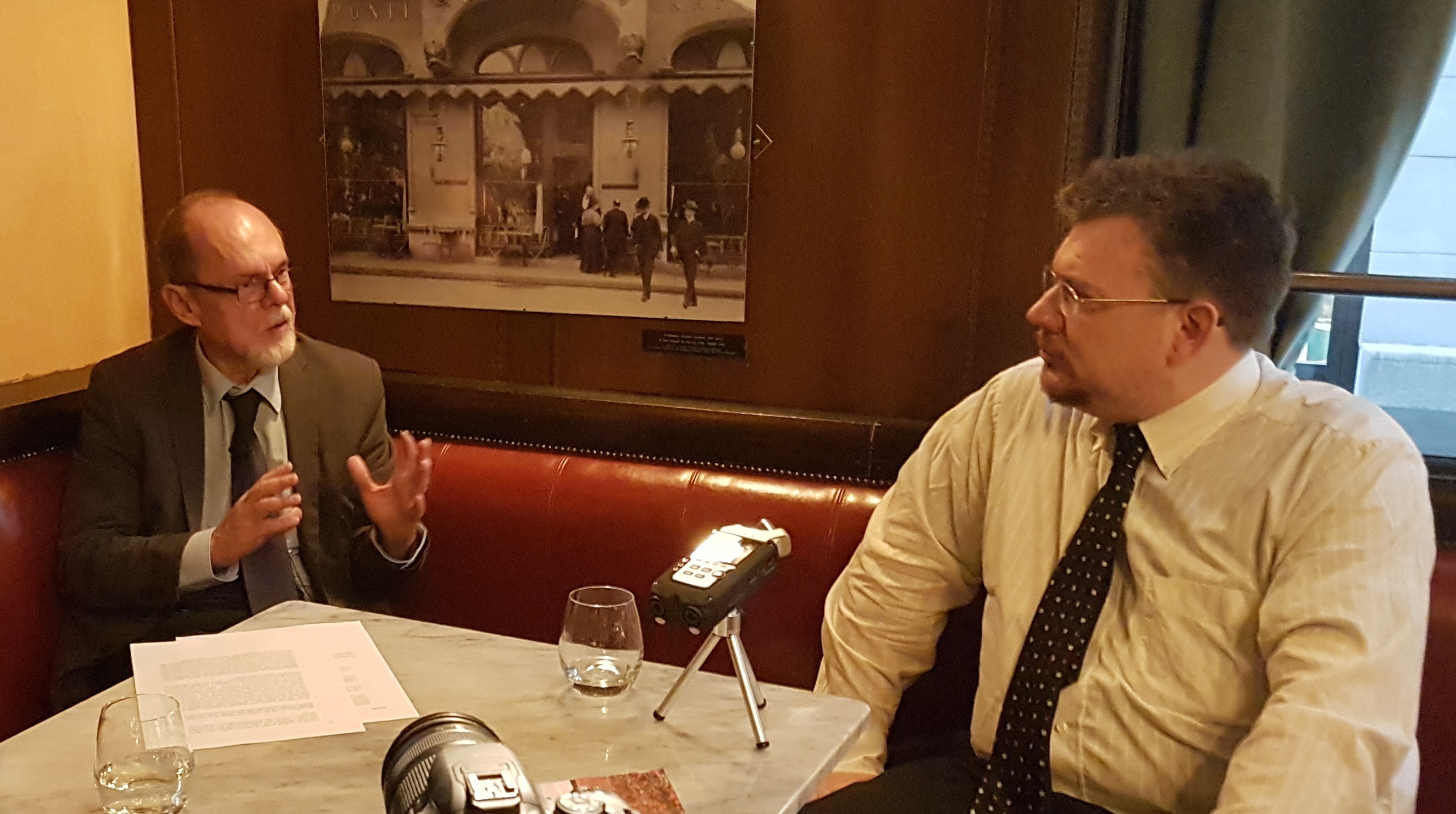
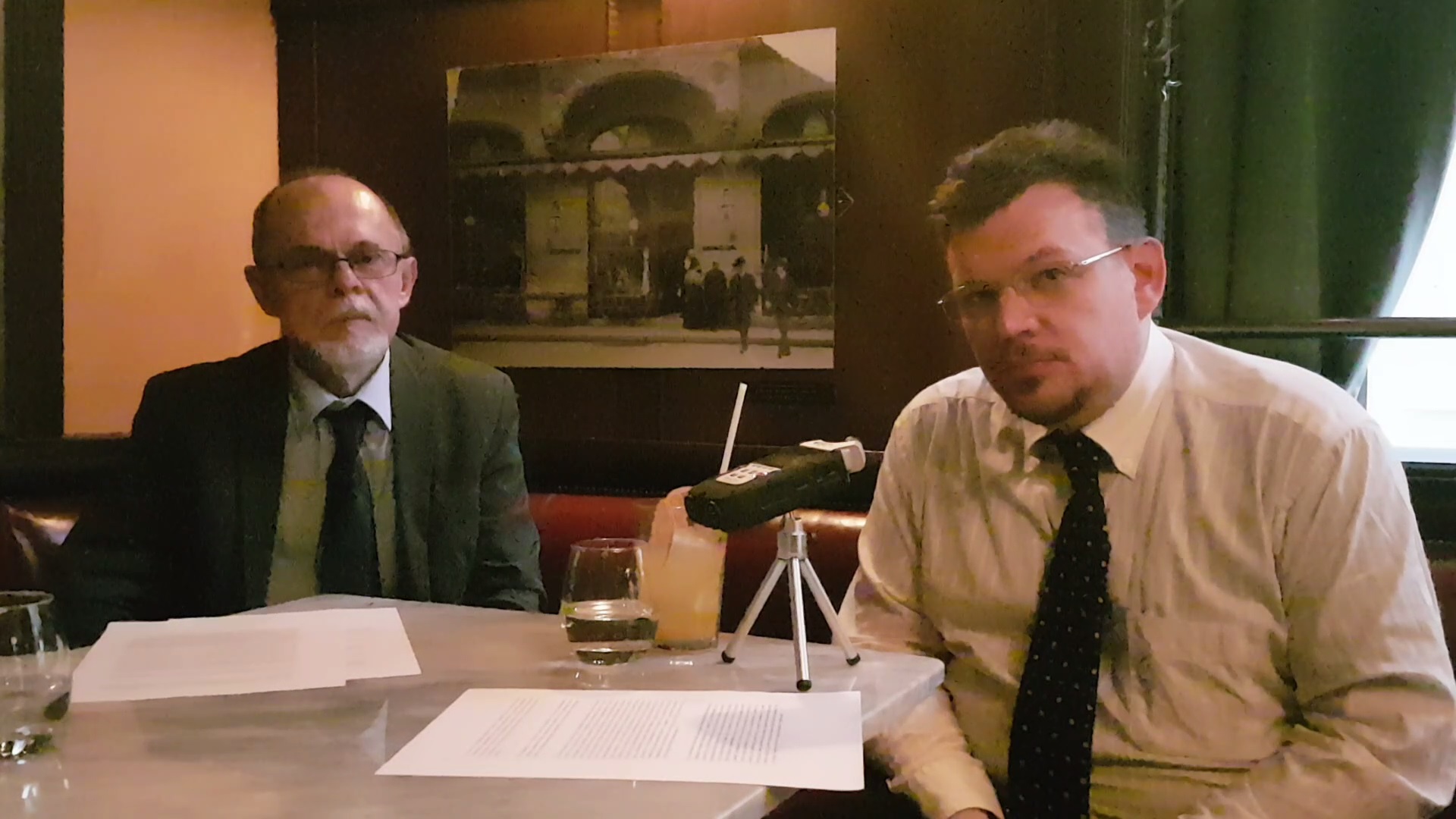


 Entonces, ¿no ve factible que la UE, con sus organismos, llegue a alcanzar el nivel de desarrollo que tiene ahora mismo EEUU?

 Es un efecto interesante, porque aquí el asunto de Wikilieaks, por ejemplo, se sabe que la gente no se va a poner a leer miles de cables diplomáticos oficiales ¡Que todo lo que dice Wikileaks
son cables diplomáticos oficiales, entre diplomáticos o servicios de
inteligencia de un país! Aquí ahora nos preocupamos de que “es que ha sido Rusia quien lo ha desvelado” -que puede ser un problema- pero lo verdaderamente interesante es lo que dicen los cables. Del asunto de Wikileaks es que son cables propios, no son cables que hayan sido copiados o imitados.
Es un efecto interesante, porque aquí el asunto de Wikilieaks, por ejemplo, se sabe que la gente no se va a poner a leer miles de cables diplomáticos oficiales ¡Que todo lo que dice Wikileaks
son cables diplomáticos oficiales, entre diplomáticos o servicios de
inteligencia de un país! Aquí ahora nos preocupamos de que “es que ha sido Rusia quien lo ha desvelado” -que puede ser un problema- pero lo verdaderamente interesante es lo que dicen los cables. Del asunto de Wikileaks es que son cables propios, no son cables que hayan sido copiados o imitados.